Tool capacity ratings define approved working limits. Duty cycles define permitted operating time. Actual performance depends on load, heat, setup, and working conditions.
Across the United States, power tools support home repairs, construction, auto service, and industrial work. A contractor in Texas may use a drill for hours. A homeowner in Ohio may use the same type of drill for a few short tasks. Both users need to know what their tools can handle. Yet a high power rating does not mean a tool can work at full load all day.
Tool capacity ratings, duty cycles, and real-world operating limits describe three related aspects of equipment performance. Capacity shows how much work a tool is designed to handle under stated conditions. Duty cycle describes how long certain tools can operate at a given load within a defined period. Operating limits include heat, power supply, material resistance, and other factors that affect actual performance.
These limits matter because a tool can reach its safe working boundary before its motor stops. A drill may slow under heavy load. An air compressor may run too often. A welding machine may stop due to excess heat. Each symptom has a different cause, and increasing the tool’s speed or force is not always the right response.
The most useful approach is to compare the job with the equipment’s documented ratings. Check the exact model, the rated load, the test conditions, and any stated time limits. Then account for the work environment. This guide explains how to make those comparisons without treating peak performance claims as proof of continuous working capacity.
What Do Tool Capacity Ratings Mean?
A tool capacity rating states a limit or performance value under defined conditions. The rating may describe weight, force, size, speed, pressure, electrical output, or material dimensions. Its meaning depends on the type of equipment.
A hydraulic jack may carry a rated lifting load in tons. A drill may list the largest recommended bit diameter for a given material. A saw may state its maximum cutting depth. An air compressor may list delivered airflow at a specific pressure.
These numbers cannot be compared as if they measured the same thing. Each rating answers a different question. A tool may also have several limits that apply at once.
For example, a saw may reach its greatest cutting depth only with the blade set vertically. Its available depth may decrease when the blade tilts. Both figures can be correct because the operating conditions differ.
Rated capacity
The approved working limit or specified output for a defined task and operating condition.
Maximum capacity
The highest stated value under specified conditions. It may not be available in every mode or for continuous use.
Continuous rating
The output a machine is designed to sustain within its stated operating and cooling conditions.
Peak output
A short-duration value that may exceed normal sustained performance. Its duration and test method must be checked.
Rated Output Is Not the Same as Maximum Output
Rated output describes performance under a specified set of conditions. Maximum output may describe a short operating event or a physical capacity limit. The two figures can differ by a large amount.
Consider a portable generator with separate starting and running watt ratings. Starting watts help cover brief motor startup loads. Running watts describe the output intended for ongoing use under the manufacturer’s conditions. A generator’s higher starting figure should not be used to plan a steady electrical load.
The same distinction applies to some cordless impact tools. A peak torque figure does not establish the torque delivered to every fastener. Battery condition, joint stiffness, tool settings, and test methods affect the result.
Why the Exact Model Matters
Two tools with similar names may have different motors, gearing, controls, or cooling systems. Even models in the same product family can have different working limits.
Check the complete model number and the revision shown on the tool or manual. Read all notes beside the rating. A value tested with one battery, voltage, attachment, or material should not be assumed to apply under other conditions.
How Tool Duty Cycles Work
Duty cycle describes the share of a defined period during which equipment performs a stated operation. It is usually expressed as a percentage. The reference period and operating conditions are essential parts of the rating.
For example, a welding machine rated for a 60% duty cycle at a specified output can weld for six minutes within a ten-minute cycle under the stated conditions. The remaining four minutes allow cooling.
The duty cycle does not tell the full story unless the rated load is known. A welder operating at a lower current may have a higher permitted duty cycle. A higher current may shorten the allowable weld time.
Duty-cycle definitions are not identical across all tool types. Welding equipment often uses a ten-minute reference period. Certain air compressor manuals specify limits over an hour. Other tools may describe intermittent use without giving a percentage.
25% duty cycle
A hypothetical ten-minute rating permits 2.5 minutes of operation and 7.5 minutes of rest at the stated load.
50% duty cycle
A hypothetical ten-minute rating permits five minutes of operation and five minutes of rest.
75% duty cycle
A hypothetical ten-minute rating permits 7.5 minutes of operation and 2.5 minutes of rest.
100% duty cycle
Continuous operation is permitted at the specified rated load and conditions, subject to other operating and maintenance limits.
How to Calculate Operating Duty Cycle
The basic formula is duty cycle percentage equals operating time divided by total cycle time, multiplied by 100.
Suppose an air compressor pump runs for six minutes and stays off for four minutes during a ten-minute observed cycle. Divide six by ten and multiply by 100. The observed pump run fraction is 60%.
This calculation measures observed use. It does not prove that a 60% workload is permitted. The rated duty cycle must still come from the equipment’s documentation.
For compressors with load and unload controls, distinguish motor running time from loaded compression time. Some motors keep running while the compressor is unloaded. The correct measurement depends on how the manufacturer defines duty cycle.
Does 100% Duty Cycle Mean Unlimited Use?
No. A 100% duty cycle applies only within the stated load and operating conditions. It does not remove restrictions on temperature, lubrication, maintenance, electrical supply, or machine setup.
A compressor designed for continuous duty still needs clean cooling air, proper oil service where required, and operation within its approved pressure range. Blocked airflow or poor maintenance can cause failure even when the normal duty-cycle rating permits continuous running.
The Compressed Air and Gas Institute also distinguishes equipment that performs well under steady loads from systems better suited to short, intermittent demand. Continuous operation is not automatically the most efficient choice for every application.
How to Read Tool Ratings Before Starting Work
The first step is to identify the actual workload. Do not begin with the largest number printed on the tool. Start with the force, size, pressure, speed, and work duration the job requires.
A tool may meet one requirement but fail another. An air compressor might supply enough pressure but too little airflow. A saw might have enough motor power but insufficient cutting depth. A drill might accept the bit size but lack the torque needed for the material.
Use the manufacturer’s operator manual and rating plate together. Check whether a rating applies to continuous work, temporary peak output, or a narrow set of test conditions.
For used equipment, confirm that attachments, guards, and controls match the approved configuration. A damaged or altered tool should not be treated as fully capable merely because its original rating was high.
Step 1: Define the task
Record the material, dimensions, required load, operating time, and work environment.
Step 2: Identify every relevant rating
Check the tool’s capacity, speed, pressure, torque, airflow, and other limits that apply to the job.
Step 3: Read the rating conditions
Confirm the input voltage, attachments, material type, temperature, and settings linked to each value.
Step 4: Check duty-cycle requirements
Compare planned run time and rest time with the manufacturer’s stated operating limits.
Step 5: Check protective features
Identify overload protection, temperature warnings, guards, and approved shutdown procedures.
Step 6: Plan for normal variation
Allow for task changes and wear without treating any safety rating as a limit that may be exceeded.
How to Compare Two Tools Fairly
Compare tools at the same workload and under similar test conditions. A torque rating measured by one method may not match a value measured by another. The same problem occurs when airflow ratings use different pressure settings.
For air compressors, delivered airflow should be compared at the pressure the air tool requires. The Compressed Air and Gas Institute distinguishes actual airflow from standardized airflow measurements and explains why reference conditions matter.
For saws and drills, compare working capacity in the same material. For welding equipment, compare duty cycle at the current and voltage needed for the job rather than comparing duty-cycle percentages alone.
Real-World Examples of Tool Capacity and Duty Cycle
Examples make capacity limits easier to apply. The calculations below are hypothetical unless a manufacturer or named guidance source is identified. They illustrate how to compare a job with equipment ratings, not how every tool will perform.
The main lesson is that a large single specification rarely tells you whether a tool can finish a job at the required pace.
Example 1: Welding machine
A hypothetical welder rated at 200 amperes and 30% duty cycle over ten minutes permits three minutes of welding and seven minutes of cooling at that rated load. Longer continuous welding would require a different permitted operating point or a suitable machine.
Example 2: Air compressor
A compressor delivers 4 SCFM at 90 PSI, while a pneumatic tool needs 5 SCFM at 90 PSI during continuous use. The air demand exceeds supply by 1 SCFM. A larger tank may delay the pressure drop but cannot remove the ongoing supply deficit.
Example 3: Cordless drill
A drill may perform well on short holes in softwood but struggle with repeated large holes in hardwood. Tool heating, bit condition, material hardness, feed force, and battery output all affect its practical workload.
Example 4: Hydraulic jack
A jack rated for 2 tons must not lift more than its approved capacity. The load must also be applied as the manufacturer specifies. The jack is a lifting device, not a substitute for properly rated support equipment.
Example: Estimating Total Operating Time
Suppose a welding job needs 24 minutes of actual arc time. The available welder permits four minutes of welding within each ten-minute duty-cycle window at the selected output.
Six such operating windows would provide 24 minutes of arc time. Each full window includes four minutes of welding and six minutes of rest. The scheduled operating windows therefore total 60 minutes.
This is a simplified planning example, not a universal completion-time rule. The actual schedule must follow the machine’s manual. Preparation, positioning, weld sequence, and required cooling can also affect total job time.
A duty-cycle percentage must not be applied to an arbitrary shorter period to justify longer uninterrupted work. The manufacturer’s stated window and cooling requirements control.
Example: Why Tank Capacity Cannot Replace Airflow
A larger air tank stores more compressed air and may support short bursts of demand. That can help a nailer or another tool with intermittent air use.
A grinder that consumes air continuously creates a different workload. If air consumption stays above compressor output, stored air will fall over time. The tank only changes how long the shortage takes to appear.
Select a compressor by the required pressure, delivered airflow, and permitted operating cycle. Treat tank size as a separate feature.
Real-world performance changes because operating conditions rarely stay constant. Loads shift, materials vary, and tool temperatures rise during use. The published rating may describe only one controlled operating point.
A motor that works within its design limits at the start of a job can become much hotter during repeated heavy use. A worn cutting edge can increase resistance. Poor ventilation can reduce the rate at which heat escapes.
These changes do not necessarily mean the published rating is false. They mean the rating must be interpreted within its documented conditions.
Heat buildup
Heavy loads create heat in motors, bearings, electronics, cutting parts, and other moving components. Excess heat can shorten service life or trigger protection.
Material resistance
Dense wood, thick steel, hard coatings, and abrasive materials can increase the load compared with easier test materials.
Power supply limits
Low input voltage, unsuitable extension cords, weak batteries, or inadequate supply circuits may reduce output or cause protective shutdowns.
Cooling airflow
Clogged vents, trapped hot air, and obstructed fans can reduce heat removal and increase motor temperature.
Worn accessories
Dull blades, damaged bits, worn wheels, and poor attachments can increase friction, vibration, and working load.
Ambient conditions
High temperatures, moisture, dust, and altitude can change performance or cooling. The effect depends on the equipment design.
How Temperature Affects Continuous Work
Heat is a key reason many powered tools cannot hold maximum output without interruption. Electrical and mechanical losses produce heat, while cooling systems move heat into the surrounding air.
When heat enters a machine faster than it leaves, internal temperature rises. A thermal control may reduce output or stop operation. Other tools may not give an early warning before damage occurs.
High ambient temperature makes cooling more difficult for many air-cooled machines. A tool working near its rated limit in a hot outdoor area may need a different work plan than one operating in a cool, well-ventilated shop.
Never assume a certain temperature reduction or duty-cycle adjustment without model-specific guidance. Follow the maker’s limits for ambient temperature, cooling clearance, and restart.
How Wear Changes Tool Performance
Normal wear can increase friction and reduce efficiency. A dull drill bit may require more feed force and produce more heat. A poorly maintained compressor may take longer to restore tank pressure.
These symptoms can make a suitable tool appear too small for the job. Maintenance should therefore be checked before deciding that a larger motor is needed.
Routine care can help preserve rated performance, but it cannot restore a worn tool beyond its approved limits. Replace damaged parts with compatible components and follow the manufacturer’s maintenance schedule.
How to Check Whether a Tool Is Operating Within Its Limits
A practical performance check begins with the manual and the tool’s condition. The goal is to confirm that the planned workload fits the stated ratings, not to push the machine until something fails.
Before testing, inspect the tool while it is disconnected from its power source where applicable. Check for visible damage, loose parts, blocked cooling vents, and unsuitable accessories. Use the required guards and protective equipment.
Only run a functional check when the equipment is safe to operate. Keep the check within the manufacturer’s approved settings and working range.
Check the setup
Confirm the correct attachment, material, speed setting, input supply, and approved operating position.
Observe normal operation
Look for steady operation, correct output, normal automatic cycling, and the absence of unexpected warnings.
Track working time
For equipment with a duty-cycle rating, record the relevant loaded or active time and compare it with the stated interval.
Watch for abnormal behavior
Stop for unexpected vibration, unusual noise, smoke, arcing, damaged wiring, fluid leaks, or repeated protection trips.
Review the result
If the tool cannot meet the workload within approved settings, check for a setup fault or choose equipment with suitable capacity.
Signs That a Tool May Be Overloaded
Overload symptoms vary by tool. A drill may stall. A saw may lose speed or bind. A compressor may run much longer than expected. A welder may show an overtemperature warning.
These symptoms are not proof of a single cause. A dull blade can slow a saw even when its motor is in good condition. An air leak can cause compressor overrun without a change in tool demand.
Stop work when a symptom raises a safety concern. Then follow the maker’s troubleshooting steps. If the cause is not clear, use qualified service rather than bypassing safety controls.
Repeated shutdown
Possible causes include thermal overload, supply faults, excessive load, or a failed component.
Loss of speed
Possible causes include high material resistance, a dull accessory, incorrect settings, or inadequate power.
Excessive vibration
Possible causes include poor attachment fit, damaged parts, imbalance, or an unstable workpiece.
Long compressor run time
Possible causes include air leakage, high demand, restricted intake airflow, or reduced pump output.
What to Do When the Check Fails
Stop the operation and place the tool in a safe state. Allow cooling only as directed by the manufacturer. Disconnect or isolate stored energy before inspection, following the applicable procedure.
Check simple external causes first, such as blocked vents, worn accessories, and incorrect settings. Do not open electrical enclosures or pressure-bearing parts unless you are qualified and authorized to service them.
If the same issue returns under a normal workload, remove the tool from service for diagnosis. A recurring overload trip should not be treated as an acceptable operating cycle.
Safety Limits That Must Never Be Exceeded
Some tool ratings are firm safety boundaries rather than performance targets. They include rated lifting loads, maximum working pressures, permitted accessory speeds, and approved structural capacities.
For construction work covered by OSHA’s jack requirements, 29 CFR 1926.305 requires the manufacturer’s rated capacity to be marked on the jack and prohibits exceeding that capacity. It also requires raised loads to be secured with appropriate blocking or other support.
Grinding tools have another critical limit. An abrasive wheel’s maximum permitted operating speed must not be below the grinder’s maximum spindle speed. OSHA regulations address this risk because an overspeed wheel can fail and throw fragments.
A tool that has enough motor power can still be unsafe if its accessory, guard, hose, lifting point, or support system is not correctly rated. The whole working system must be suitable for the job.
Never exceed a rated lifting load
Use suitable equipment and the approved contact points. Keep people clear of unsupported loads.
Never exceed maximum working pressure
Check the ratings of hoses, fittings, pressure vessels, regulators, and connected accessories.
Never overspeed a cutting or grinding accessory
Confirm speed compatibility and use the required guard before operation.
Never bypass overload protection
Repeated shutdowns require diagnosis. Removing protective controls can increase the risk of failure.
Never assume a peak rating is safe for continuous use
Follow the manufacturer-defined continuous output and operating duration.
When Professional Help Is Needed
Seek a qualified technician or responsible professional when a task involves uncertain load support, repeated electrical trips, damaged pressure equipment, or a failed safety device.
Structural lifting, industrial machinery modifications, pressure-system repairs, and permanent electrical changes may require specialized training, engineering review, or compliance with applicable rules.
Published tool ratings do not replace an approved lifting plan, a safe electrical design, or a workplace hazard assessment. The consequences of failure must guide the decision to seek help.
Common Mistakes When Interpreting Tool Specifications
The most common mistake is treating one large number as proof of overall performance. A higher watt rating does not guarantee a faster cut. A larger tank does not guarantee enough airflow. A higher peak torque number does not establish better results in every fastening task.
Another mistake is ignoring the conditions used to produce the rating. Performance may change with material, operating mode, voltage, and temperature.
Tool specifications are useful only when they answer the right working question.
Confusing power input with output
Electrical input describes consumed power. It does not directly state the mechanical work delivered after internal losses.
Ignoring rest periods
A tool with an intermittent-duty limit must not be treated as suitable for nonstop full-load operation.
Using no-load RPM as loaded speed
A tool’s speed without resistance may differ from its speed during cutting, drilling, or grinding.
Comparing incompatible ratings
Pressure, torque, airflow, and power figures are meaningful only with their units and operating conditions.
Treating protection as permission
An automatic shutdown can reduce damage risk, but it does not authorize repeated operation beyond the stated limits.
Assuming unused capacity creates a universal safety margin
A lower workload may reduce stress, but it does not remove separate limits for stability, speed, pressure, setup, or support.
Why Bigger Is Not Always Better
Extra capacity can help when work demands vary. Yet a larger machine may cost more, take more space, or require a stronger power supply.
A large compressor may also work poorly when demand is far below its intended operating range. The Compressed Air and Gas Institute explains that some compressor types perform best under steady loaded operation, while other designs suit intermittent demand.
Choose capacity according to the workload rather than buying the largest machine available. A well-matched tool can meet the task without adding unnecessary operating burdens.
How to Choose Tool Capacity for Your Workload
Choose a tool that can meet the required output for the full working pattern. Capacity and duty cycle should be considered together.
Start with the hardest normal task rather than the easiest one. Then consider how often that task occurs, how long each operation lasts, and whether the equipment needs time to cool.
For intermittent household projects, a tool with a lower duty rating may be suitable if the work stays within its limits. A production task with long uninterrupted runs may require equipment specifically designed for sustained service.
Occasional home repairs
Focus on the required capacity, safe operation, and whether the normal work pattern fits the tool’s documented limits.
Regular workshop use
Compare sustained output, cooling, service needs, accessory cost, and the expected number of work cycles.
Professional trade work
Consider daily load, jobsite temperature, power availability, downtime, service support, and repeatability.
Continuous industrial work
Use equipment rated for the required operating conditions and integrate inspection, maintenance, and safe system design.
A Practical Capacity Planning Example
Suppose a workshop uses a pneumatic tool that needs 6 SCFM at 90 PSI while its trigger is held. The first question is how much time the tool spends operating at that demand.
If the job requires long, steady use, the compressor must supply enough air at the required pressure without exceeding its approved duty cycle. A compressor rated for only 4 SCFM at 90 PSI would not meet that continuous demand by itself.
If the same tool operates in short bursts, stored air and the compressor’s permitted recovery cycle may support the work. The actual demand pattern must be calculated before making that choice.
This example shows why pressure, flow, storage, and duty cycle are separate specifications. All four affect the operating result.
What to Record for Future Tool Selection
Keep a simple record of the tool model, required workload, operating duration, accessory type, and any documented problems. Record the conditions when a tool loses output or stops unexpectedly.
Such records can help distinguish an undersized tool from poor setup or maintenance. They also support a more accurate decision when replacing or upgrading equipment.
A replacement should solve the documented limitation. Buying more peak power will not correct an inadequate support system, an unsafe accessory, or a poor work method.
What Published Ratings Establish and What They Do Not
A manufacturer rating is documented information about equipment performance or capacity under stated conditions. It is not independent proof that the tool outperforms competing models.
Miller Electric’s welding guidance explains duty cycle through rated output and ten-minute operating periods. The Compressed Air and Gas Institute describes compressor capacity, airflow measurements, and operating patterns. OSHA provides enforceable safety requirements for specified equipment and workplace activities.
These sources serve different purposes. Manufacturer material defines a product’s intended operating limits. Industry guidance helps explain technical principles. Regulations define obligations within their stated scope.
None of those sources establishes how an unknown tool will perform after years of wear or under conditions outside its specifications. That would require evidence from the exact model and a suitable test method.
The examples in this guide are calculations and interpretations of documented principles. They are not presented as original hands-on testing or verified performance measurements of specific tools.
Documented
A stated manufacturer rating, approved operating condition, or applicable published safety requirement.
Calculated
A result derived from stated inputs, such as run time divided by total cycle time.
Condition-dependent
A performance outcome that can change with load, material, environment, setup, or maintenance.
Not established
A claim of superior reliability, longer life, or better real-world performance without suitable comparative evidence.
Frequently Asked Questions
Q
What Is the Difference Between Tool Capacity and Duty Cycle?
Capacity describes how much load or output a tool can handle under specified conditions. Duty cycle describes how much of a defined period the tool can perform a stated operation. A machine can have high capacity but a limited operating duty cycle.
Both ratings matter when choosing equipment for repeated or continuous work.
Q
Can a Tool Run Continuously at Its Maximum Rating?
Only when the manufacturer explicitly permits continuous operation at that rating and under the actual working conditions. A maximum or peak rating alone does not establish continuous capability.
Check the manual for continuous output, cooling requirements, and ambient temperature limits.
Q
Does a Higher Duty Cycle Mean a More Powerful Tool?
No. Duty cycle describes permitted operating duration under a stated load. It does not directly measure peak power, torque, cutting speed, or maximum capacity.
A tool with lower peak output may sustain its rated workload longer than a more powerful tool designed mainly for short bursts. Compare both output and operating time.
Q
Can I Increase Tool Duty Cycle by Adding Cooling?
Do not increase a published duty-cycle limit based on added fans or other cooling modifications unless the manufacturer has approved that setup and issued suitable ratings.
Good ventilation and proper maintenance help a tool work as designed. They do not create a new certified or approved operating limit. Unauthorized cooling modifications can also affect guards, electrical safety, and warranty terms.
Q
Why Does My Tool Overheat Even When It Seems to Be Within Its Rating?
Possible causes include high ambient temperature, blocked vents, worn accessories, excessive feed force, unsuitable supply voltage, or an internal fault. The operating load may also be higher than expected.
Stop the tool, follow the approved cooling procedure, and inspect only the parts you can safely check. If overheating returns during normal use, seek qualified service before further operation.
✦ Wrapping Up
Conclusion
Tool capacity ratings, duty cycles, and real-world operating limits help explain what equipment can handle and how long it can perform the work. Each rating has a distinct purpose. Capacity describes an approved load or output. Duty cycle describes operating time under stated conditions. Real-world limits reflect the effects of heat, resistance, power supply, maintenance, and environment.
A single high specification should never decide tool selection. Check the required workload, the exact model’s ratings, and the conditions attached to those ratings. Compare tools using the same units and operating points whenever possible.
For safety-critical equipment, follow the stated maximum limits without exception. If a tool repeatedly slows, overheats, or shuts down during approved use, identify the cause before continuing. Maintenance may restore normal performance, but some jobs require equipment with greater sustained capacity.
The best result comes from matching the tool to the full task rather than relying on a peak number. Proper sizing, safe operation, and regular care can reduce interruptions and help equipment perform as intended.
💡 Key Takeaway
Before your next project, write down the required load, operating time, and working conditions. Compare those needs with the exact tool’s capacity rating, duty cycle, and manufacturer instructions. Choose a different tool or work method if any approved limit would be exceeded.
Tool Feed Pressure and Contact Management starts with steady support, the right feed rate, and safe contact. Learn how to set, spot, and fix poor control.
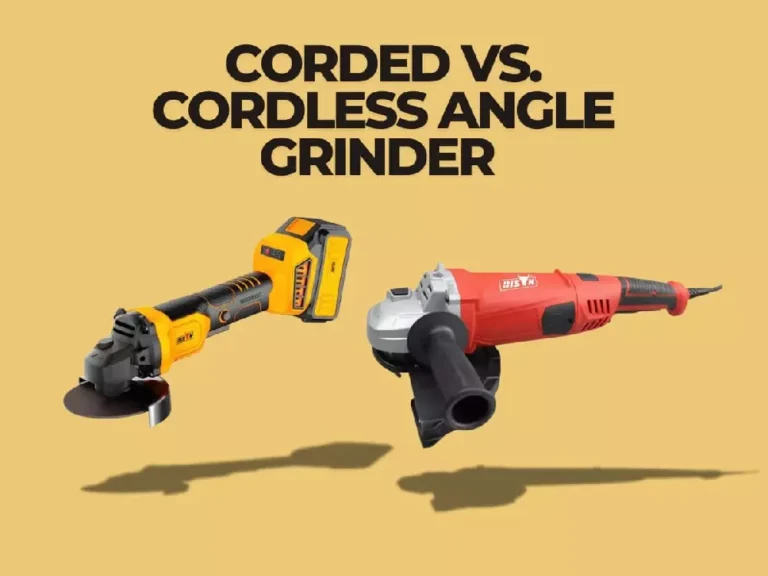
Compare corded angle grinder vs cordless angle grinder performance, runtime, and cost to pick the right tool for your projects. Quick buying tips inside.