Random orbital sander delivers a smoother, swirl-free finish; sheet sander wins tight spots and edge work.
I’ve spent years refinishing furniture and building cabinets, testing and teaching people how to choose tools. This guide compares random orbital sander vs sheet sander with clear, practical advice. I’ll walk you through how each tool works, where each shines, real-world tips, and how to pick the right sander for your project. Read on if you want confident, efficient sanding and fewer surprises on your next build or repair.
How random orbital sander and sheet sander work
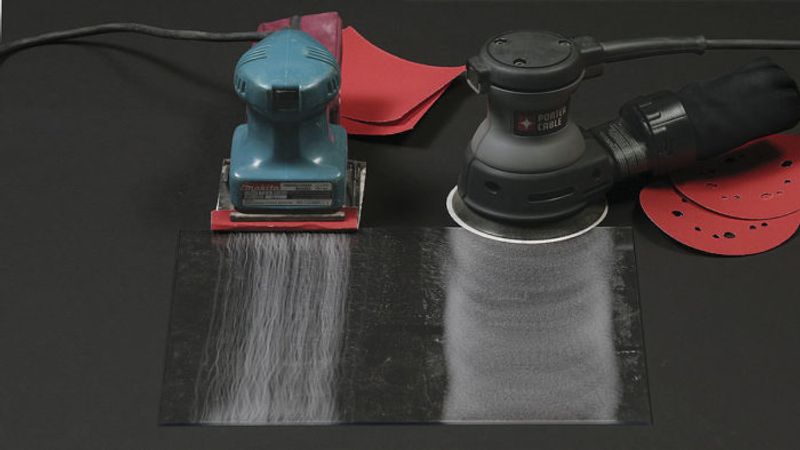
A random orbital sander spins a round pad in small orbits while the pad also rotates. That combined motion reduces swirl marks and creates a smooth finish fast.
A sheet sander, often called a finishing or palm sander, moves the paper in a simple back-and-forth orbit. It uses rectangular sandpaper sheets that clamp on, which makes it easy to sand edges and corners.
Understanding these basic motions explains why the random orbital sander vs sheet sander debate matters: one minimizes visible marks, the other gives control in tight areas. Use the motion type as your first decision point when planning a sanding task.
Features comparison
Motion and finish
- Random orbital sander: dual-action motion for smoother, swirl-free surfaces.
- Sheet sander: linear or orbital stroke better for edges, but more prone to visible lines.
Pad shape and sandpaper
- Random orbital sander: round hook-and-loop pads, easy to swap grits.
- Sheet sander: rectangular sheets, cut-to-fit or full sheets, better edge contact.
Speed and control
- Random orbital sander: variable speed models give more control over material removal.
- Sheet sander: simpler speed control and predictable behavior for light finishing.
Size, weight, and grip
- Random orbital sander: available in compact and full-size; often balanced for two-handed control.
- Sheet sander: very light and easy to hold in one hand for long periods.
Accessories and adaptability
- Random orbital sander: many choices of pad sizes and dust systems.
- Sheet sander: can use hand-cut sheets for odd grits and shapes.
These feature differences drive how you pick between random orbital sander vs sheet sander for specific tasks and surfaces.

Performance and finish
Finish quality
- Random orbital sander: excels at fast material removal with a fine finish when you proceed through grits.
- Sheet sander: great for final smoothing in corners and on flat faces but may leave linear scratches if not used carefully.
Material removal rate
- Random orbital sander: removes material faster on large, flat surfaces.
- Sheet sander: slower removal but superior for controlled touch-ups.
Common problems and fixes
- Swirl marks: rare with a random orbital sander; use finer grits and consistent motion to avoid them.
- Scratch lines: can appear with a sheet sander; always finish with a random orbital sander or hand block if needed.
Practical example
- Refinishing a tabletop: start with a random orbital sander to level and remove finish, then use a sheet sander for edges and corners to ensure even blending.
Knowing how each tool affects finish helps you plan grit sequence and tool handoff for best results in the random orbital sander vs sheet sander matchup.
:max_bytes(150000):strip_icc()/102152229-8ba187db6fe949d49d53fe99c409b2ac.jpg)
Ease of use and ergonomics
Learning curve
- Random orbital sander: modest learning curve. Hold lightly and move steadily; let the tool do the work.
- Sheet sander: very intuitive and simple for beginners.
Comfort and fatigue
- Random orbital sander: balanced models reduce wrist strain during big jobs.
- Sheet sander: lightweight and less fatiguing for long, light sanding sessions.
Control and precision
- Random orbital sander: good control on large panels, but less precise in corners.
- Sheet sander: great precision at edges, flush sanding, and tight spots.
For DIYers and pros alike, the random orbital sander vs sheet sander choice often comes down to the tradeoff between speed and fine control.

Dust collection and maintenance
Dust management
- Random orbital sander: many models offer efficient dust ports and bags or can connect to vacuums.
- Sheet sander: simpler dust bags; less efficient on heavy sanding.
Filter and bag upkeep
- Empty bags often to maintain suction and reduce clogging. Check ports for blockages regularly.
Pad and paper care
- Replace worn pads and check backing plates on random orbital sanders to avoid vibration.
- Keep sheet clamps clean and ensure paper is flat for even sanding.
Routine checks extend tool life and protect your health. Proper dust control is a major reason professionals prefer a random orbital sander vs sheet sander on large jobs.

Cost, availability, and value
Price ranges
- Random orbital sander: mid to high price for cordless and high-performance models; many budget options exist for occasional use.
- Sheet sander: usually lower-cost and widely available.
Consumables and long-term value
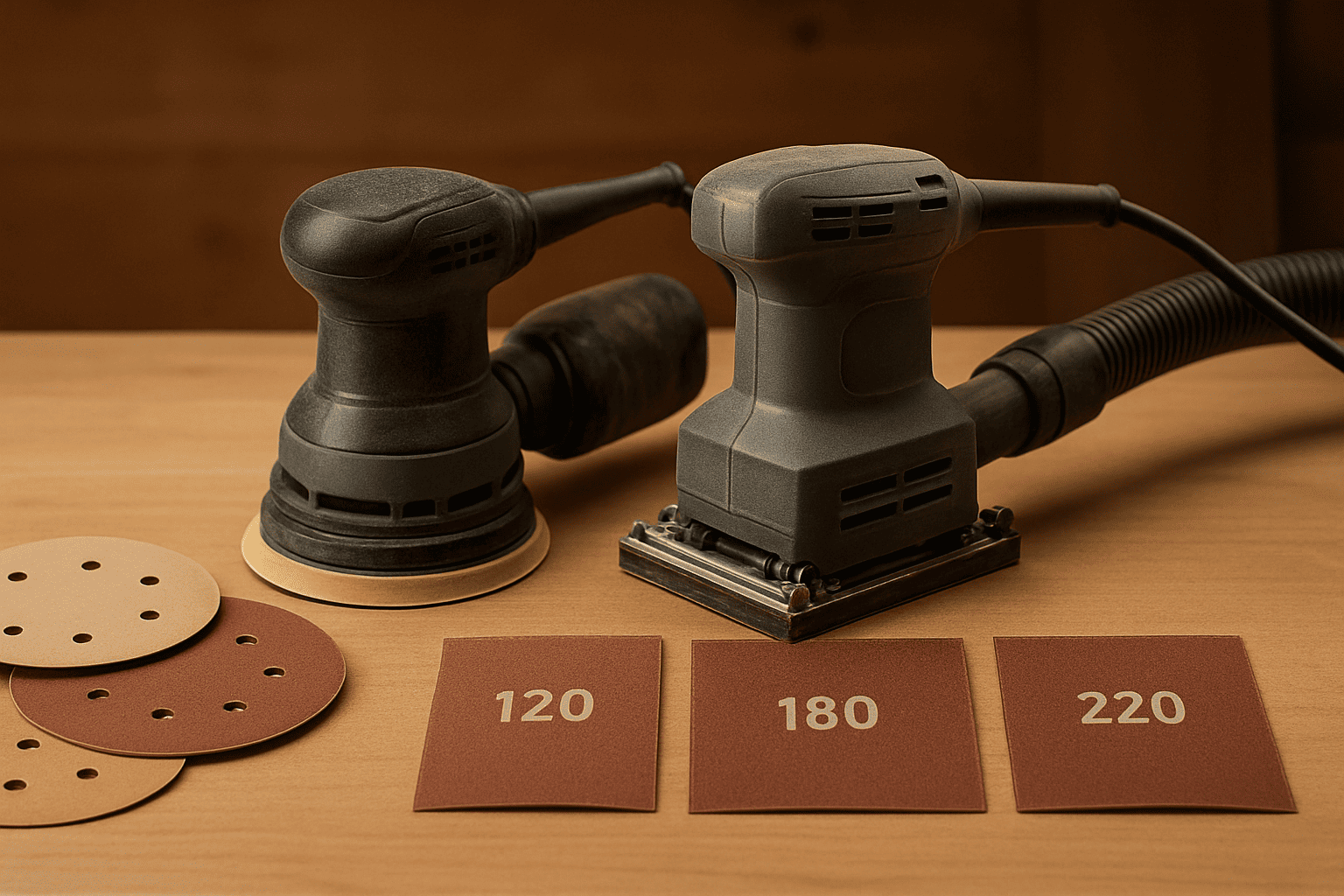
- Sandpaper for both is inexpensive, but hook-and-loop discs for random orbital sanders are easier and faster to change.
- A mid-range random orbital sander often pays off in time saved on big jobs.
Resale and durability
- Random orbital sanders from good brands tend to hold value and handle heavy use.
- Sheet sanders are inexpensive to replace if only used occasionally.
When evaluating random orbital sander vs sheet sander, think beyond purchase price—consider speed, finish, and convenience for your typical projects.
Best uses and project matchups
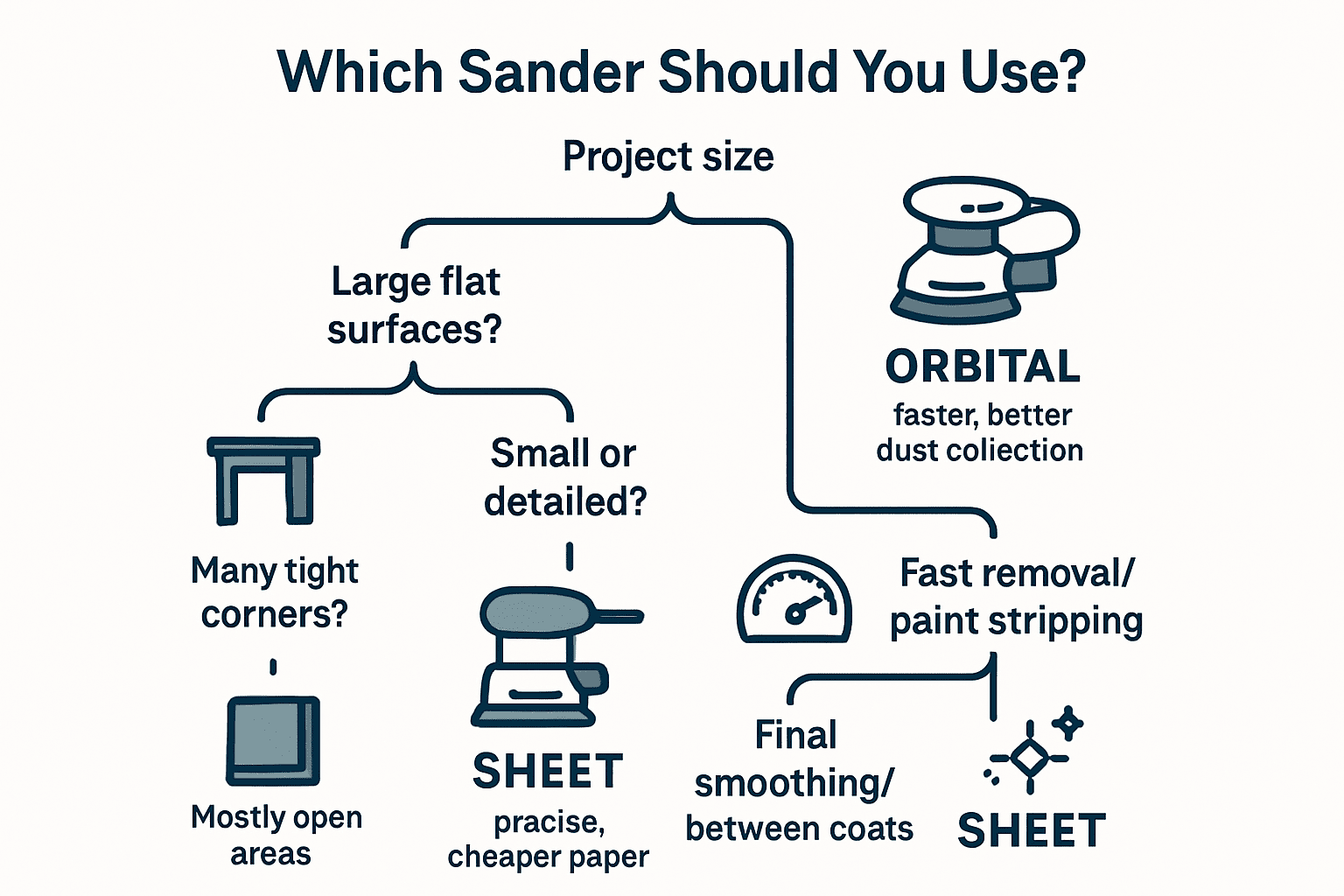
Use a random orbital sander when:
- You need a smooth, swirl-free finish on tabletops, doors, floors, or large panels.
- You are removing paint or leveling glue spots quickly.
- You want efficient dust collection and variable speed control.
Use a sheet sander when:
- You need careful edge work, corners, and flush sanding.
- You’re doing light finishing, touch-ups, or working on moulding.
- You prefer a lightweight tool for long, precise passes.
Project examples
- Furniture restoration: random orbital sander for faces; sheet sander for trim and tight spots.
- Cabinet doors: random orbital sander to remove finish; sheet sander to fine-tune panel edges.
Match the tool to the task and you’ll get better results faster in the random orbital sander vs sheet sander decision.
:max_bytes(150000):strip_icc()/SPR-palm-sander-vs-orbital-sander-8610618-hero-a279efa0b9fc44aeb1aad6aa7d70263e.jpg)
Personal experience and practical tips
Real-world testing
I’ve refinished dozens of tables and cabinets using both tools over many years. I start with a random orbital sander to take off the old finish and then switch to a sheet sander to smooth corners and tight profiles. This combination saved me time and reduced sanding marks.
Mistakes I learned from
- Rushing grits: skipping grits caused blotchy finishes. Always step down gradually.
- Pressing too hard: both tools work best with light pressure; pressing causes uneven removal.
- Ignoring dust ports: clogged dust paths made finishes dusty. I now empty bags and clean ports after each job.
Practical tips
- Use a tack cloth after sanding to lift remaining dust.
- Test sand on a scrap piece or hidden area to judge grit progression.
- When sanding end grain, go lighter and use finer grits to avoid roughness.
These tips come from hands-on experience and will help you choose wisely between random orbital sander vs sheet sander and use them together for the best results.

Frequently Asked Questions of random orbital sander vs sheet sander
Which sander gives a smoother finish?
A random orbital sander generally yields a smoother, swirl-free finish due to its dual motion. Use finer grits for the final pass to maximize smoothness.
Can I use the same sandpaper for both sanders?
You can use similar grit types, but the backing differs: discs for random orbital sanders and sheets for sheet sanders. Cut sheets to size or buy compatible discs to save time.
Is one sander better for beginners?
A sheet sander is simpler and very beginner-friendly for light finishing. Random orbital sanders are also easy to learn and better when speed and finish matter.
How do I avoid swirl marks or scratch lines?
Use consistent motion and proper grit progression. Finish with a finer grit and, if needed, switch to the opposite sander type to remove machine marks.
Which tool collects more dust?
Random orbital sanders typically have superior dust-collection options and connect to vacuums, making them cleaner on large jobs. Sheet sanders collect dust but less efficiently during heavy sanding.
Conclusion
Both tools are valuable: the random orbital sander excels on big surfaces and delivers a smooth, professional finish, while the sheet sander shines in corners, edges, and detailed work. Choose based on your project needs, or use both in sequence for best results. Try pairing a random orbital sander with a sheet sander on your next project to save time and improve finish quality. If you found this helpful, subscribe for more practical tool guides or leave a comment with your sanding questions.