A socket wrench is the tool; a ratchet wrench is the socket-driving mechanism, and they often work together.
If you have ever tightened a bolt under a sink, changed a tire, or built furniture, you already know how useful the socket wrench vs ratchet wrench choice can be. I have spent enough time in garages and job sites to know this topic gets mixed up a lot, so let’s clear it up in a simple, practical way.
Socket wrench vs ratchet wrench: the real difference
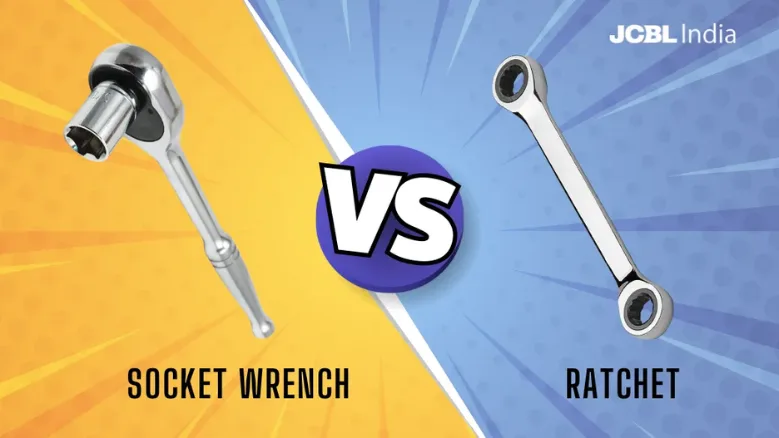
The easiest way to think about socket wrench vs ratchet wrench is this: a socket wrench is usually the broader tool category, while a ratchet wrench is the handle that lets you turn fasteners without lifting the tool after each turn. In day-to-day use, people often say “socket wrench” when they really mean a ratchet handle with a socket attached.
A socket is the removable head that fits over nuts and bolts. The ratchet is the handle with a gear inside that allows motion in one direction and free movement in the other. That tiny gear is what makes ratcheting so helpful in tight spaces.
Here’s the simple version from experience:
- Socket wrench: a general term many people use for a wrench that uses sockets
- Ratchet wrench: the handle that drives the socket with quick back-and-forth motion
- Socket set: the group of sockets that work with a ratchet or breaker bar
In real work, the socket wrench vs ratchet wrench debate is less about “which is better” and more about “which one fits the job.” I have seen people strip bolts because they used the wrong size socket, and I have seen others waste time because they used a non-ratcheting tool where a ratchet would have saved minutes on every fastener.
What is a socket wrench?
A socket wrench is a tool used to turn fasteners like nuts and bolts with a socket attached. The socket fits over the fastener head, giving you a snug grip that helps reduce slipping and damage.
In many toolboxes, the phrase socket wrench is used loosely. Some people mean the ratchet handle plus socket. Others mean the whole system, including sockets, extensions, adapters, and the handle.
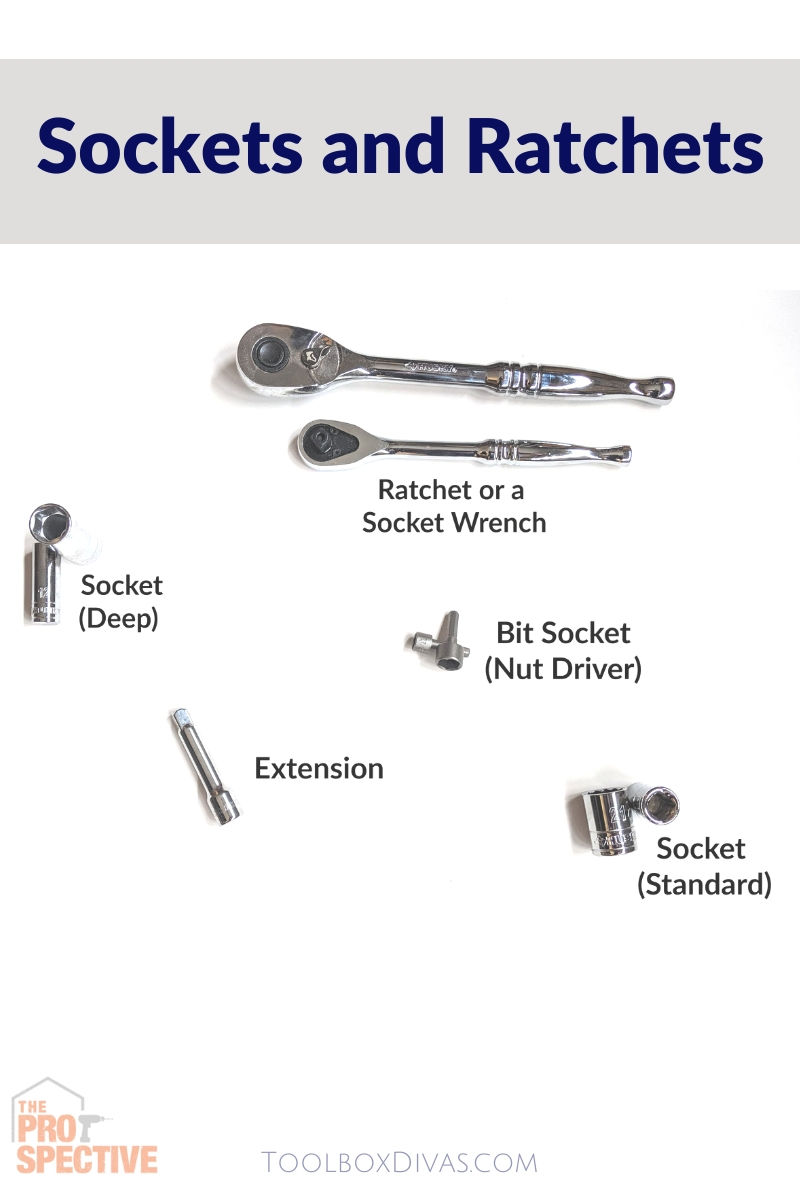
Common parts of a socket wrench setup include:
- Ratchet handle: provides the turning action
- Sockets: fit different fastener sizes and shapes
- Extensions: help reach recessed bolts
- Universal joint: helps at awkward angles
- Breaker bar: a long non-ratcheting handle for high torque
One thing I learned early is that a good socket setup saves both time and frustration. When the fastener sits deep in an engine bay or behind plumbing lines, the right socket setup can feel like a tiny miracle.
What is a ratchet wrench?
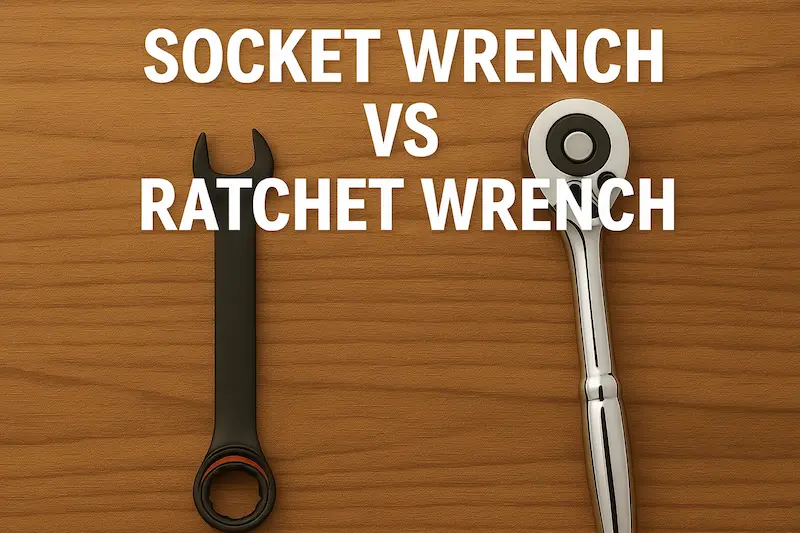
A ratchet wrench is a hand tool with a gear-and-pawl mechanism that lets you turn a fastener in one direction while the handle resets in the other. That means you can keep the socket on the bolt and work with small swings, which is perfect in tight spaces.
The ratchet wrench is especially useful when you do not have room for a full turning circle. Instead of removing the tool after every small turn, you just flip the handle back and continue.
Why people love ratchet wrenches:
- Faster work in tight spots
- Less hand fatigue
- Better control during repeated turns
- Easier use in automotive and mechanical tasks
I still remember replacing a starter on an old car where every inch mattered. A ratchet wrench turned a miserable job into a manageable one. Without it, I would have been stuck making tiny hand moves for an hour.
Socket wrench vs ratchet wrench: how they work together
This is where the confusion usually starts. In most everyday conversations, people use socket wrench vs ratchet wrench as if they are opposites, but they are often part of the same system.
The ratchet wrench is the handle. The socket wrench setup is the full combination of handle and socket. When you click a socket onto a ratchet, you create a tool that can turn fasteners quickly and efficiently.
Think of it like a camera and lens:
- The camera body is the ratchet
- The lens is the socket
- The full setup is the working system
That is why choosing between socket wrench vs ratchet wrench often means choosing between a complete setup and a specific handle style. If you already own sockets, you may just need a better ratchet. If you are starting from scratch, a socket set with a ratchet is usually the smarter buy.
When to use a socket wrench
A socket wrench setup is best when you need speed, fit, and control. It is one of the most practical tools for home repair, car repair, and basic mechanical work.
Use a socket wrench when:
- You need to remove or install bolts quickly
- The fastener is recessed or hard to reach
- You want less chance of rounding the bolt head
- You are working on cars, bikes, appliances, or furniture
A socket wrench shines in jobs like:
- Tire changes
- Battery replacements
- Brake work
- Cabinet assembly
- Machine maintenance
From my own experience, sockets with a secure fit are a lifesaver on worn bolts. A box-end wrench can slip where a socket holds steady, especially when the fastener is deep or oily.
When to use a ratchet wrench
A ratchet wrench is the better choice when you need repeated turns in a small space. It works especially well when a full swing is impossible or too slow.
Use a ratchet wrench when:
- The fastener is in a cramped area
- You need faster repetitive turning
- You want to avoid lifting and repositioning the tool
- You are working overhead or in awkward positions
A ratchet wrench is very helpful for:
- Under-dash repairs
- Engine bay work
- Plumbing in tight cabinets
- Furniture assembly with many small bolts
One common mistake is using a ratchet for a fastener that is too tight. If the bolt is seized, a ratchet can take a beating. In that case, a breaker bar or penetrating oil is usually the safer move.
Socket wrench vs ratchet wrench: key differences
Here is the practical breakdown of socket wrench vs ratchet wrench:
- Function: A socket wrench system turns fasteners with interchangeable sockets, while a ratchet wrench is the handle mechanism that lets you turn without resetting each time
- Speed: Ratchet wrenches are faster for repetitive work
- Torque: Socket setups can handle high torque, especially with the right handle
- Reach: Ratchets work well in tight spaces
- Flexibility: Socket systems offer many sizes and accessories
- Ease of use: Ratchets reduce hand movement and fatigue
The biggest lesson here is that socket wrench vs ratchet wrench is not always an either-or question. The ratchet often depends on the socket, and the socket needs the right drive size to work well.
Types of socket wrenches and ratchet wrenches
There are several versions of each, and knowing them helps you pick the right tool.
Drive sizes
Common drive sizes include:
- 1/4 inch: best for small fasteners and light work
- 3/8 inch: the most versatile size for home and auto use
- 1/2 inch: better for larger fasteners and higher torque
Ratchet styles
- Standard ratchet: the everyday choice
- Flex-head ratchet: helps with angled access
- Long-handle ratchet: gives more leverage
- Stubby ratchet: useful in very tight spots
Socket types
- Shallow sockets: for exposed fasteners
- Deep sockets: for longer bolts or recessed nuts
- Impact sockets: built for power tools and heavy-duty work
- Specialty sockets: for spark plugs, lug nuts, and unusual fasteners
When I buy tools, I usually start with a 3/8 inch ratchet and a solid socket set. That combination handles most jobs without feeling too bulky or too delicate.
%20(2)%20(1).png)
Pros and cons of each tool
Socket wrench pros
- Strong grip on fasteners
- Wide range of sizes and accessories
- Useful for many repair tasks
- Works well with extensions and adapters
Socket wrench cons
- Can be confusing for beginners
- Needs matching socket sizes
- Less useful without the right attachments
Ratchet wrench pros
- Fast and efficient
- Great for tight spaces
- Reduces hand fatigue
- Makes repetitive work easier
Ratchet wrench cons
- Not ideal for stuck bolts
- Internal gear can wear out
- Lower-quality ratchets may slip or fail
If I had to give one simple rule, I would say this: use a ratchet for convenience, but do not trust it as a miracle worker on seized hardware. The right tool saves time; the wrong one can make a small job become a long story.
How to choose the right one for your job
Choosing between socket wrench vs ratchet wrench gets much easier when you think about the task first.
Ask yourself:
- Is the fastener easy to reach?
- Do I need speed or brute force?
- Is the bolt tight, rusted, or stuck?
- What size drive do I need?
- Will I be working in a confined area?
For most people, a 3/8 inch ratchet with a basic socket set is the best starting point. It gives a good balance of power, reach, and versatility.
A simple buying tip from real-world use:
- Choose a ratchet with a comfortable grip
- Pick sockets made from chrome vanadium steel for hand tools
- Add extensions and a universal joint later if needed
- Keep metric and SAE sockets separate and organized
Common mistakes to avoid
A lot of tool damage comes from simple mistakes, not bad tools.
Avoid these errors:
- Using the wrong socket size
- Forcing a ratchet on a stuck bolt
- Mixing metric and SAE sizes
- Using a worn or cracked socket
- Forgetting to seat the socket fully on the fastener
I have seen more rounded bolts caused by the wrong size socket than by any other issue. A snug fit matters more than people think. It is like shoes: close enough is not good enough.
Maintenance tips for longer tool life
Good tools last a long time if you take care of them. This is especially true for ratchets, since the internal gear can wear if neglected.
Simple care tips:
- Wipe tools clean after use
- Keep sockets dry to prevent rust
- Store sets in a case or organizer
- Do not use a ratchet as a hammer
- Lubricate the ratchet mechanism if it becomes stiff
One habit that has helped me for years is checking the ratchet before a big job. A few clicks by hand can tell you if the gear feels smooth or if it needs service.
Frequently Asked Questions
Is a socket wrench the same as a ratchet wrench?
Not exactly. A socket wrench is often the full tool setup, while a ratchet wrench is the handle that lets you turn the socket in small movements. People use the terms loosely, but they are not always identical.
Which is better for tight spaces?
A ratchet wrench is usually better for tight spaces because it lets you turn a fastener without a full swing. That makes it ideal for engine bays, cabinets, and other cramped spots.
Can I use sockets without a ratchet?
Yes, you can use sockets with a breaker bar, a torque wrench, or other compatible drive tools. A ratchet is just the most convenient option for everyday turning.
What size socket wrench should I buy first?
A 3/8 inch drive set is the best starting point for most people. It is versatile enough for home repairs, light automotive work, and general maintenance.
Why do ratchets fail on stuck bolts?
Ratchets are built for turning, not for extreme force. If a bolt is seized, the gear inside the ratchet can wear out or break, so a breaker bar is the safer choice.
Conclusion
When you compare socket wrench vs ratchet wrench, the big takeaway is simple: they are related tools with different roles. The socket gives you the fit, and the ratchet gives you the speed and convenience. Together, they make fastener work easier, cleaner, and far less frustrating.
If you are building your first tool kit, start with a quality ratchet and a well-made socket set. If you already own one, make sure the other matches it properly so you get the most out of every job. Keep learning your tools, use the right size, and you will save time, protect your hardware, and work with a lot more confidence.
If this guide helped, keep exploring more tool-buying tips and practical repair advice, and feel free to leave a comment with the job you are tackling next.