A breaker bar loosens stubborn fasteners; a torque wrench tightens them to exact spec.
If you work on cars, bikes, or machinery, knowing the difference between a breaker bar vs torque wrench can save time, money, and stripped parts. I’ve used both tools for years, and the biggest lesson is simple: they look similar, but they do very different jobs. In this guide, I’ll walk you through breaker bar vs torque wrench in plain English, with real-world tips, common mistakes, and the best ways to use each tool the right way.
What is a breaker bar?
A breaker bar is a long, non-ratcheting hand tool made for extra leverage. Its job is to break loose tight bolts or nuts that are stuck from rust, heat, or age. The long handle gives you more turning force without needing to yank hard.
I think of a breaker bar as the “freight train” of hand tools. It is not built for finesse. It is built for force, and that is why it is so useful when a regular ratchet just gives up.
Common uses include:
- Removing lug nuts
- Loosening suspension bolts
- Breaking free rusty engine fasteners
- Starting removal on old hardware
A breaker bar does not measure torque. It does not click or stop at a set value. That makes it simple, strong, and reliable for loosening, but not ideal for final tightening.
What is a torque wrench?
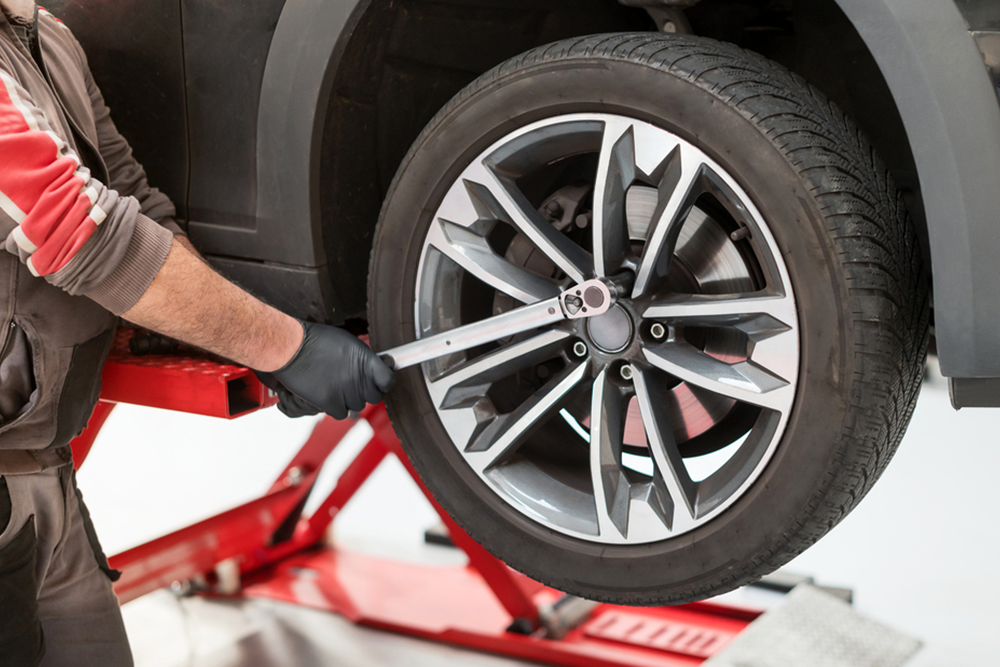
A torque wrench is a precision tool used to tighten fasteners to a specific torque value. That torque is usually listed in foot-pounds, inch-pounds, or newton-meters. The goal is accuracy, not raw strength.
In the shop, this tool is the “steady hand” of the pair. It helps prevent under-tightening, which can cause parts to come loose, and over-tightening, which can strip threads, warp parts, or crack components.
Common uses include:
- Tightening lug nuts to factory spec
- Installing spark plugs
- Assembling engine components
- Tightening brake, intake, and suspension bolts
There are several types, including click-type, beam-style, and digital torque wrenches. Click-type models are common because they are easy to use and provide a clear signal when the set torque is reached.
Breaker bar vs torque wrench: the main difference
The biggest breaker bar vs torque wrench difference is purpose. A breaker bar is for loosening, while a torque wrench is for tightening to a precise spec.
Here’s a simple way to remember it:
- Breaker bar = force
- Torque wrench = accuracy
A breaker bar can apply a lot of leverage, but it cannot tell you how much torque you are using. A torque wrench can tell you when you have reached the correct value, but it should not be used to break loose stuck bolts because that can damage its internal mechanism.
If I had to boil it down from years of wrenching, I’d say this: use brute force to remove, and use precision to install.
When to use a breaker bar
Use a breaker bar when a fastener is too tight for a normal ratchet or when you need controlled leverage to remove something stubborn. It is especially helpful when corrosion or thread locking compound is involved.
Good times to use a breaker bar:
- Tire changes on over-tightened lug nuts
- Suspension repair
- Exhaust work
- Rusted bolts on older vehicles
A big advantage is that the tool is simple and durable. There are fewer moving parts than a ratchet, so it can stand up to heavy use.
A practical tip from experience: keep your stance stable and pull smoothly. Sudden jerks can slip sockets, round fasteners, or send your hand flying if the bolt breaks loose fast.
When to use a torque wrench
Use a torque wrench when the manufacturer gives a torque specification and the order of tightening matters. This is common in engine work, wheel installation, and brake jobs.
Use one for:
- Lug nuts after tire rotation
- Cylinder head bolts
- Spark plugs
- Critical suspension fasteners
- Any part that needs exact tightening
This tool matters because torque is not just “tight enough.” Different parts have different clamping needs. Too little torque can let parts move, and too much can stretch bolts or damage gasket surfaces.
I learned this the hard way early on. I once helped reassemble a valve cover by “feel” instead of spec, and the result was a slow oil leak that could have been avoided with a torque wrench and five extra minutes.
Can a breaker bar and torque wrench be used together?
Yes, and in many cases they should be used together. A breaker bar helps remove the fastener first, then a torque wrench handles the final tightening.
A common workflow looks like this:
- Use the breaker bar to loosen the fastener
- Remove the part
- Reinstall by hand first to avoid cross-threading
- Finish tightening with a torque wrench to spec
This is the safest and cleanest approach. It gives you both control and accuracy without putting unnecessary stress on the tools.
How to choose the right tool for the job
Choosing between breaker bar vs torque wrench depends on the task, not just the fastener.
Ask yourself these questions:
- Are you loosening a stuck fastener?
- Do you need exact tightening?
- Is the part safety-critical?
- Does the manufacturer list a torque spec?
If the answer is “loosening,” go with a breaker bar. If the answer is “tightening to spec,” choose a torque wrench.
Here are some quick buying tips:
- Pick a breaker bar with a comfortable grip and the right drive size, such as 1/2-inch for automotive work
- Choose a torque wrench with a range that matches your common jobs
- Do not use a torque wrench at the very top or bottom of its range for best accuracy
- Store torque wrenches at the lowest setting recommended by the manufacturer if it is a click-type model
Torque wrench accuracy and safety
A torque wrench is only useful if it stays accurate. Dropping it, using it as a breaker bar, or storing it incorrectly can throw off its calibration.
To keep it reliable:
- Calibrate it on the schedule recommended by the manufacturer
- Avoid using it to break loose tight bolts
- Never use it past its rated range
- Reset click-type wrenches after use if the manual says to do so
Industry guidance from tool makers and automotive service standards consistently stresses calibration and proper handling because tightening accuracy matters in safety-related jobs. That includes wheel installation, brake work, and engine assembly.
Common mistakes to avoid
I see the same mistakes over and over, especially from beginners.
Avoid these errors:
- Using a torque wrench to loosen bolts
- Guessing torque by feel on critical parts
- Over-tightening lug nuts with a breaker bar
- Using the wrong socket size
- Forgetting to clean dirty or rusty threads before tightening
- Ignoring the manufacturer’s torque spec
A dirty thread can give a false torque reading, because friction changes the actual clamp load. That means the number on the wrench may look right, but the fastener may not be seated correctly.
Breaker bar vs torque wrench for lug nuts
This is one of the most common places people compare breaker bar vs torque wrench. For lug nuts, the breaker bar is best for removal, and the torque wrench is best for final installation.
A good wheel service process is:
- Break lug nuts loose with the vehicle on the ground
- Lift the vehicle safely
- Remove the nuts fully
- Reinstall the wheel by hand
- Tighten lug nuts in a star pattern with a torque wrench
That star pattern matters because it helps the wheel seat evenly. It is a small step that prevents vibration and uneven clamping.
Breaker bar vs torque wrench for home mechanics
For most home garages, both tools are worth having. A breaker bar gives you muscle when a bolt refuses to move, and a torque wrench gives you confidence when you need a job done correctly.
If you are building a basic kit, start with:
- A 1/2-inch drive breaker bar
- A 1/2-inch drive torque wrench for bigger jobs
- A 3/8-inch drive torque wrench for smaller fasteners
- Quality sockets that fit tightly
If I had to recommend only one first purchase, I would ask what kind of work you do most. For tire swaps and brake jobs, a torque wrench should come first. For rust-belt repairs or older vehicles, a breaker bar may feel like a lifesaver.
Why torque specs matter so much
Torque specs are not random numbers. They are based on bolt size, material, thread design, and the clamping force the joint needs.
Proper torque helps:
- Keep parts from loosening
- Prevent gasket leaks
- Protect threads from damage
- Maintain even load across mating surfaces
This is why “tight by feel” can be risky on modern vehicles. Many parts are designed with tight tolerances, and one bad over-tightened bolt can turn a simple job into an expensive repair.
Practical real-world examples
Here are a few examples from real shop work where the breaker bar vs torque wrench choice matters:
- A rusted sway bar bolt may need a breaker bar first, then a torque wrench during reassembly
- A wheel replacement needs a breaker bar for stubborn lug nuts and a torque wrench for correct final torque
- A spark plug job usually should not involve brute force at all; instead, clean threads and use a torque wrench to avoid cracking the head or stripping the plug
One lesson I always share is this: the tool you use first is often not the tool you need last. Removal and installation are different jobs, even if they involve the same fastener.
Frequently Asked Questions
Can a breaker bar replace a torque wrench?
No, a breaker bar cannot replace a torque wrench because it does not measure torque. It is great for loosening stuck fasteners, but it cannot ensure accurate tightening.
Can I use a torque wrench to loosen bolts?
You should avoid using a torque wrench to loosen bolts. Doing so can damage the calibration or internal mechanism, especially on click-type models.
Which is better for changing tires?
For changing tires, the breaker bar is better for removing stubborn lug nuts, and the torque wrench is better for tightening them properly. Using both gives the safest and most accurate result.
Do I really need a torque wrench at home?
If you work on anything safety-related, like wheels, brakes, or engine parts, yes, you should have one. A torque wrench helps prevent costly damage and gives you much better control than guessing by feel.
What size breaker bar is best for cars?
A 1/2-inch drive breaker bar is the most common choice for car work. It handles lug nuts, suspension bolts, and other larger fasteners well without being too bulky.
Conclusion
When comparing breaker bar vs torque wrench, the choice comes down to purpose. Use a breaker bar when you need leverage to loosen stubborn hardware, and use a torque wrench when you need accurate, safe tightening.
If you remember one thing, make it this: strength gets the job apart, but precision puts it back together correctly. Pick the right tool, follow the torque spec, and your work will be safer, cleaner, and more reliable.
If this guide helped you understand breaker bar vs torque wrench, keep learning, check your tool kit, and share your own shop tips in the comments.