A jab saw is more versatile for rough cuts, while a keyhole saw is better for tighter, cleaner control.
If you have ever tried to cut a hole in drywall, trim, or paneling, you know the tool matters a lot. The jab saw vs keyhole saw debate comes up because both tools look similar, both make small interior cuts, and both are used for detail work. But once you understand how each one behaves in real hands, the choice gets much easier.
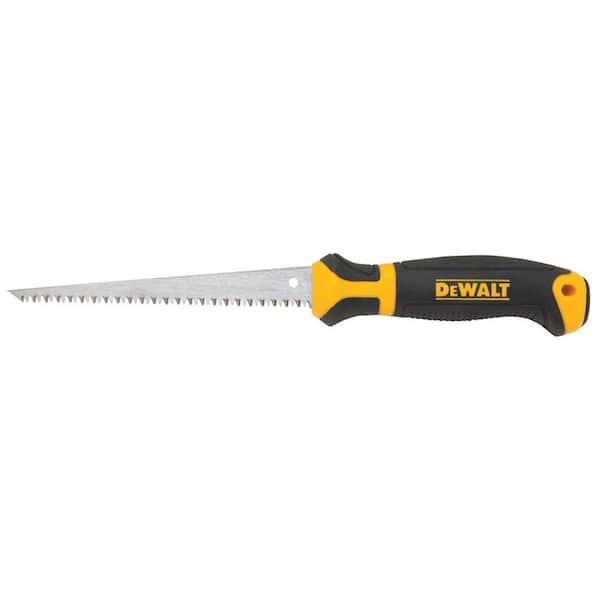
What Is a Jab Saw?
A jab saw is a handheld saw with a long, narrow blade and a sharp pointed tip. That pointed tip lets you “jab” straight into drywall or other soft sheet material without drilling a starter hole first.
In my own use, the jab saw feels like the more aggressive tool. It is fast, practical, and made for rough interior cuts. When I need to open up drywall for an electrical box or HVAC access, I reach for a jab saw before anything else.
A jab saw usually has:
- A stiff blade for push-and-pull cutting
- A sharp tip for starting cuts in the middle of a panel
- Coarse teeth for quick cutting through drywall, plasterboard, and similar materials
Because of its shape, a jab saw is often called a drywall saw. That name is common on job sites and in home improvement stores, and it fits the tool well.
What Is a Keyhole Saw?
A keyhole saw is also a narrow hand saw, but it is usually more refined and controlled than a jab saw. It is built for cutting small openings, curved lines, and tight spaces where a little more precision helps.
The blade on a keyhole saw is often slimmer and may be slightly longer or more flexible than a jab saw blade. Some versions have a fixed handle, while others have a pistol-style grip for better control.
In practical use, the keyhole saw feels more delicate. I have used it for cutouts in wood trim, plywood, and finish work where a rough drywall tool would be too clumsy. If the jab saw is a machete, the keyhole saw is more like a pocket knife.
Jab Saw vs Keyhole Saw: The Main Differences
The jab saw vs keyhole saw comparison is easier when you look at the job each tool was designed to do. They overlap, but they are not the same.
Here are the biggest differences:
- Cutting style: A jab saw is built for fast, rough interior cuts. A keyhole saw is better for controlled, detailed cuts.
- Blade shape: Jab saw blades are often stiffer and more aggressive. Keyhole saw blades are usually slimmer and more precise.
- Best use: Jab saws shine in drywall and plasterboard. Keyhole saws work well for wood, paneling, trim, and small openings.
- Control: A keyhole saw gives you more finesse. A jab saw gives you more speed.
- Tooth design: Jab saws often have coarser teeth. Keyhole saws may have finer teeth for cleaner results.
If you are choosing between them, think about whether you need speed or accuracy. That simple question solves most of the jab saw vs keyhole saw confusion.
When to Use a Jab Saw
A jab saw is the better choice when the material is soft and the cut is rough or hidden. It saves time and does not require much setup.
Use a jab saw for:
- Drywall cutouts for outlets, switches, and access panels
- Small demolition work
- Plasterboard cuts during repairs
- Rough openings where the edges will be covered later
- Fast cuts in soft sheet materials
I still remember one repair where I needed to open drywall behind a vanity for a leak check. A jab saw made the job easy because I could start in the middle of the wall and cut the opening in minutes. The edge was not pretty, but it did not need to be. It was hidden by the repair.
That is the real strength of a jab saw. It is not trying to win beauty contests. It is trying to get the job done.
When to Use a Keyhole Saw
A keyhole saw is the better tool when you want more control and a neater cut. It works well in tighter spaces and on materials where a cleaner line matters.
Use a keyhole saw for:
- Small wood cutouts
- Trim and molding adjustments
- Curved or detail cuts
- Paneling work
- Tight spots where a larger blade would be awkward
When I have had to trim a piece of wood paneling around pipes or vents, the keyhole saw has been my safer pick. The narrower blade gives me better feel, and that matters when the cut will be visible.
If the job needs patience and a steady hand, the keyhole saw usually wins the jab saw vs keyhole saw match.
Which One Cuts Cleaner?
In most cases, the keyhole saw cuts cleaner than the jab saw. That is because it is meant for finer control, especially on materials where tear-out and rough edges are a concern.
Still, the cleanest cut depends on a few things:
- The material type
- The sharpness of the blade
- The pressure you apply
- How steady your hand is
- Whether the cut will be hidden or visible
A jab saw can still do a decent job, especially in drywall. But if you are working on finished wood, the keyhole saw usually leaves a better edge.
Which One Is Easier for Beginners?
For many beginners, the jab saw is easier to use on drywall because it is simple and fast. You do not need a pilot hole, and the pointed tip helps you start right away.
That said, it is also easier to make a sloppy cut with a jab saw if you press too hard. I have seen plenty of first-time users force the blade and end up with a ragged opening that was larger than they planned.
A keyhole saw takes a little more patience, but it rewards careful movement. If your goal is to learn control, it can actually be the better teacher.
Materials Each Saw Works Best On
The jab saw vs keyhole saw choice also depends on the material you are cutting.
Jab Saw Best Materials
- Drywall
- Plasterboard
- Gypsum board
- Some thin plastic sheet materials
- Soft wallboard
Keyhole Saw Best Materials
- Wood trim
- Plywood
- Paneling
- Laminate surfaces
- Thin boards and detail work materials
If you try to force the wrong saw into the wrong material, you will notice it fast. The cut will bind, splinter, or wander. That is usually a sign to switch tools instead of pushing harder.
Pros and Cons of a Jab Saw
A jab saw has a lot going for it, especially in remodeling work.
Pros
- Starts cuts easily in the middle of a panel
- Fast on drywall and similar materials
- Simple to use
- Affordable and widely available
- Good for rough openings
Cons
- Can leave rough edges
- Not ideal for finish carpentry
- Less precise than a keyhole saw
- Can overcut if used carelessly
The jab saw is like a strong helper. It is quick, dependable, and not picky. But it is not the right pick when the finish has to look perfect.
Pros and Cons of a Keyhole Saw
The keyhole saw offers more finesse, but it has its own limits.
Pros
- Better precision
- Cleaner cuts in visible areas
- Good for small detail work
- Easier to control in tight spaces
- Useful for curved lines
Cons
- Usually slower than a jab saw
- Not as efficient for rough drywall cuts
- May need more skill for smooth results
- Can feel less stable on thick material
In my experience, the keyhole saw is one of those tools that feels small but earns its keep. It is not flashy, but it saves the day when the cut is visible and needs to look right.
How to Choose Between Jab Saw vs Keyhole Saw
If you are stuck between jab saw vs keyhole saw, use this simple guide:
- Choose a jab saw if you are cutting drywall, making rough openings, or working fast.
- Choose a keyhole saw if you need cleaner control, tighter curves, or more visible finish work.
- Choose a jab saw if the cut will be hidden later.
- Choose a keyhole saw if the cut edge will stay exposed.
A good rule of thumb is this: drywall and demolition lean jab saw, detail and trim lean keyhole saw. That one habit can save time and reduce mistakes.
Practical Tips for Better Results
A good saw helps, but technique matters just as much. I learned early that even the right tool can produce bad results if the angle is off or the blade is dull.
Here are a few tips that help in real use:
- Mark your cut line clearly before you start
- Let the saw do the work instead of forcing it
- Use short, steady strokes for control
- Keep the blade sharp
- Wear eye protection and gloves when needed
- Support the material so it does not flex
One mistake I used to make was rushing the start of the cut. That usually led to a wandering line. A slower start almost always gives a better finish, whether you are using a jab saw or keyhole saw.
Safety Considerations
Both tools are simple, but they can still cause injury if used carelessly. The pointed tips and exposed teeth deserve respect.
Keep these safety habits in mind:
- Check for wires, pipes, and hidden utilities before cutting
- Use protective glasses
- Keep both hands stable on the tool and workpiece
- Do not cut toward your body
- Store the saw with the blade covered if possible
When working in walls, I always recommend checking for electrical and plumbing hazards first. A tool is only as smart as the person using it, and hidden utilities can turn a small job into a big problem fast.
Jab Saw vs Keyhole Saw in Real Projects
In real-world use, the jab saw vs keyhole saw decision often comes down to the project.
Here are a few common examples:
- Drywall repair: Jab saw
- Outlet or switch opening: Jab saw
- Trim adjustment: Keyhole saw
- Paneling cutout: Keyhole saw
- Access hole behind cabinets: Jab saw
- Small curved wood cut: Keyhole saw
Think of it like choosing between work boots and dress shoes. Both go on your feet, but they are built for different settings.
Frequently Asked Questions of jab saw vs keyhole saw
Is a jab saw the same as a keyhole saw?
Not exactly. They look similar, but a jab saw is usually made for faster drywall cutting, while a keyhole saw is better for tighter control and cleaner detail work.
Can I use a keyhole saw on drywall?
Yes, you can use a keyhole saw on drywall, especially for smaller or more precise cuts. Still, a jab saw is usually faster and easier for standard drywall openings.
Which saw is better for beginners?
A jab saw is often easier for beginners on drywall because it starts cuts quickly. A keyhole saw may be better if the beginner wants more control and cleaner lines.
Do I need both tools?
Not always, but having both is useful if you do home repairs often. A jab saw handles rough wall cuts well, while a keyhole saw helps with finer finishing tasks.
Which one is better for curved cuts?
A keyhole saw usually handles curved cuts better because it offers more control. That makes it a stronger choice for detail work in wood or paneling.
Conclusion
The jab saw vs keyhole saw choice is really about speed versus precision. If you need to cut drywall fast and start in the middle of a panel, the jab saw is the better tool. If you want cleaner control in tighter spaces or on visible material, the keyhole saw usually comes out ahead.
The good news is that you do not have to guess. Once you match the saw to the material and the finish you want, the work gets smoother and less stressful. Try both on your next project, and you will quickly feel which one fits your hands and your style best.
If this guide helped, keep exploring more tool comparisons and practical how-to tips so your next project feels easier from the start.

Mick Thomas
Contributor