Track saws excel at clean, portable cuts; table saws win for speed, repeatability, and production work.
If you’re comparing track saw vs table saw, you’re probably trying to solve a real shop problem: how to cut sheet goods cleanly, safely, and without wasting time. I’ve used both on job sites and in small shops, and the truth is simple: the best choice depends on your space, your workflow, and the kind of cuts you make most often. This guide breaks down track saw vs table saw in plain English so you can choose the tool that fits your work, not just the one that looks strongest on paper.
Track Saw vs Table Saw: What Each Tool Does Best
A track saw is a circular saw that rides on a guide rail. It is built for long, straight, highly accurate cuts, especially in plywood, MDF, and large panels. A table saw uses a fixed blade that stays in place while you push the material through it, which makes it a workhorse for repeat cuts, rips, and production tasks.
When people ask about track saw vs table saw, they usually want to know which one is more useful day to day. The honest answer is that each tool shines in a different lane. A track saw is like a scalpel. A table saw is like a stationary engine built for volume.
From my own experience, the biggest difference is not just cut quality. It is workflow. A track saw is easier to move, easier to set up for big sheets, and far safer for breaking down plywood on a floor or a pair of foam boards. A table saw is faster when you need to rip the same width over and over, especially with jigs, fences, and outfeed support.

How a Track Saw Works
A track saw uses a straight guide rail to control the cut path. The blade plunges into the material, which gives you more control and cleaner entry points than a standard circular saw. Most systems also include splinter guards that help reduce tear-out along the cut line.
This tool is popular with cabinet makers, finish carpenters, and DIYers who work with sheet goods. It is especially useful when you need accuracy without a large fixed machine. You can cut full plywood sheets on the floor, on sawhorses, or on a portable work surface.
Some practical benefits of a track saw include:
• Easy breakdown of large panels
• Clean edges with less tear-out
• Simple transport to job sites
• Better control on long cuts
• Less material handling in tight spaces
The main limitation is speed. A track saw is not usually the fastest option for repeated rip cuts. It is more about precision and flexibility than sheer output.
How a Table Saw Works
A table saw has a blade that rises through a flat table surface. You guide the board past the blade using a fence, miter gauge, sled, or other accessory. This setup is ideal for repeatable cuts, narrow rips, and woodworking tasks that need consistency.
A good table saw is the center of many shops. It handles hardwood, plywood, trim stock, and joinery work with ease. If you are building cabinets, furniture, or frames, it can save a lot of time once it is dialed in.
Here are some strengths of a table saw:
• Fast repeated cuts
• Strong fence-based accuracy
• Good for narrow boards and strips
• Great for shop-based production
• Useful for joinery with sleds and jigs
The downside is space and setup. A table saw needs room. It also demands more attention to safety, because the blade is exposed and the workpiece is often handled near the cutting zone.
Track Saw vs Table Saw: Key Differences That Matter
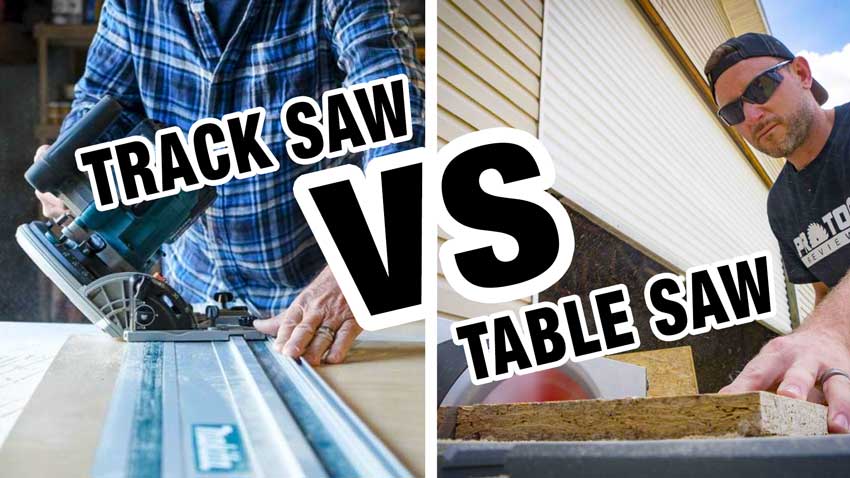
The track saw vs table saw debate gets clearer when you compare them by job, not by hype. Both tools can make straight cuts, but they do it in very different ways. That difference affects speed, safety, accuracy, and convenience.
Accuracy
A track saw is excellent for long straight cuts in sheet goods. The rail acts like a built-in fence, so it is easy to follow a line. I have seen people get almost zero visible tear-out with the right blade and tape setup.
A table saw is also very accurate, especially for repeat rips. Once the fence is set correctly, every cut matches the last one. That repeatability is hard to beat in a shop setting.
Speed
A table saw usually wins on speed for repetitive work. Feed a board, make the cut, reset, repeat. That rhythm is efficient when you have a stack of parts to cut.
A track saw takes longer to set up for each cut, even though the setup is simple. For one-off or large sheet cuts, though, the time savings from easier handling can balance things out.
Portability
This is where the track saw really pulls ahead. You can carry it in one hand, pack the tracks in a case, and work almost anywhere. That matters on remodels, apartment jobs, and small garages.
A table saw is far less portable. Even a jobsite table saw needs a stand, power, and a stable area. Cabinet saws and hybrid saws are even more locked into place.
Safety
Both tools can be safe when used properly, but the risk profile is different. A track saw keeps your hands away from the blade more easily, and the cut happens along a guided rail. That can feel calmer, especially for large panels.
A table saw demands more discipline. Kickback risk, blade exposure, and hand placement are serious concerns. Safety gear, push sticks, and proper setup are not optional here.
Cut Capacity
A track saw is excellent for wide panels because the cut happens where the material already is. You are not limited by fence width in the same way a table saw is.
A table saw is limited by rip capacity, fence quality, and table size. Once the material gets very large, handling becomes the bigger challenge.
Track Saw vs Table Saw for Plywood and Sheet Goods
If your main question is track saw vs table saw for plywood, the track saw often feels easier and cleaner. Large sheets are awkward on a table saw, especially when you work alone. A track saw lets you break down sheets on the floor before moving smaller pieces to the bench or saw.
That said, a table saw still has a role. After rough breakdown with a track saw, many woodworkers use the table saw to trim parts to final size. This two-step method is common because it combines the strengths of both tools.
A practical workflow looks like this:
- Break down the plywood sheet with a track saw
- Move the smaller panels to the table saw
- Make final rips and squares on the fence
- Use a crosscut sled or miter gauge for final sizing
This approach saves time and reduces strain. It also lowers the chance of wrestling a full 4×8 sheet across a small saw table.

Track Saw vs Table Saw for Cabinet Work
For cabinet work, track saw vs table saw is not an either-or choice in many shops. The track saw is often the better tool for rough cutting sheet stock. The table saw is often better for final sizing, face frame parts, and repeated cabinet components.
When I worked around cabinet builds, the track saw was the tool that made large-sheet work feel manageable. But the table saw was the tool that kept parts consistent. If a cabinet side needed six identical rips, the fence did the heavy lifting.
Cabinet builders often value:
• Clean plywood edges
• Square panels
• Repeatable part sizes
• Fast workflow from rough cut to final cut
• Fewer layout mistakes
That is why many professionals keep both tools. Each one fills the gap left by the other.
Track Saw vs Table Saw for Small Shops
In a small shop, space changes everything. A track saw can do a lot without needing permanent floor space. You can store it in a cabinet and bring it out only when needed. That makes it a smart choice for garage shops and cramped work areas.
A table saw can still work in a small shop, but you need to plan around it. You need infeed and outfeed space, dust control, and safe movement around the blade. In a tiny shop, that can become a daily frustration if the layout is poor.
If your space is limited, ask yourself these questions:
• Do I cut more sheet goods or narrow boards?
• Can I safely support long boards around a table saw?
• Will I use the saw every day or just occasionally?
• Do I need portability more than speed?
For many small shops, a track saw is the easiest first purchase. A compact table saw can come later if production demands grow.
Track Saw vs Table Saw Safety Considerations
Safety should be a major part of the track saw vs table saw decision. Both tools can injure you if used carelessly. Still, the risks are different enough that your comfort level matters.
A track saw usually feels more controlled. The blade is guided, the workpiece is larger, and your hands are often farther from the cut path. That said, it can still pinch, bind, or create unsafe dust conditions if the material is unsupported.
A table saw needs more respect. Kickback is the big concern, especially with warped stock, poor fence alignment, or bad feeding technique. Good setup matters a lot. So does using push sticks, blade guards when practical, and proper stance.
A few safety habits I strongly recommend:
• Keep blades sharp and suited to the material
• Support workpieces fully on both tools
• Never rush the feed rate
• Use hearing and eye protection
• Avoid cutting warped or dirty lumber without checking it first
Industry safety guidance consistently points to setup, training, and attention as the biggest factors in reducing table saw injuries. That lines up with what most experienced woodworkers learn the hard way: a good tool is not enough. Good habits matter more.
Track Saw vs Table Saw: Cost and Value
Price is another big part of track saw vs table saw. A quality track saw system can seem expensive at first, especially once you buy tracks, clamps, and a good blade. But it may still cost less than a full table saw setup with stand, fence, dust collection, and shop space.
A table saw can also range widely in price. Jobsite saws are cheaper, while cabinet saws can be a serious investment. The real cost includes more than the sticker price. It includes space, accessories, and the time needed to set up a safe working area.
Think about value this way:
• Buy a track saw if you need flexibility and panel cutting
• Buy a table saw if you need speed and repeat cuts
• Buy both if your work mixes sheet goods and production ripping
If you only work on occasional home projects, a track saw may give you the most value per dollar. If you build often, a table saw may pay for itself faster.
Which One Is Better for Beginners?
For many beginners, the track saw is easier to learn. The rail gives guidance, the cuts are visible, and setup is simpler. It also feels less intimidating because you are not feeding wood into an exposed blade.
A table saw is still a fantastic learning tool, but it demands more caution and more practice. You need to understand fence alignment, blade height, stock support, and kickback prevention. That learning curve is worth it, but it is steeper.
If you are new and trying to decide between track saw vs table saw, start with the tool that matches your most common work. If you cut plywood, a track saw is a strong first step. If you cut lumber into repeated dimensions all the time, a table saw may be the better starter.
Track Saw vs Table Saw: Pros and Cons Summary
Here is the short version of track saw vs table saw based on real-world use:
Track saw pros:
• Portable and easy to store
• Great for sheet goods
• Clean, accurate cuts
• Safer feel for many users
• Ideal for on-site work
Track saw cons:
• Slower for repeated cuts
• Tracks and accessories add cost
• Less ideal for production ripping
Table saw pros:
• Fast and repeatable
• Great for shop work
• Excellent for ripping boards
• Strong with jigs and fixtures
• Central tool for many woodworking tasks
Table saw cons:
• Takes more space
• Harder to move
• More safety risk if used poorly
• Less convenient for full-sheet handling
How to Choose Between Track Saw vs Table Saw
The best choice comes down to your work style. If you build mostly from plywood, move between job sites, or need a tool that stores easily, a track saw is probably the smarter buy. If you do a lot of repeat cuts, hardwood ripping, and furniture or cabinet production, a table saw may be the better fit.
A simple rule of thumb:
• Choose a track saw for portability and sheet goods
• Choose a table saw for speed and repetitive ripping
• Choose both if you want a complete shop workflow
In my own experience, the track saw solved the “how do I move this giant sheet?” problem. The table saw solved the “how do I make ten identical parts fast?” problem. That is why many serious woodworkers end up using both.
Frequently Asked Questions
Is a track saw more accurate than a table saw?
A track saw can feel more accurate on large panels because the rail keeps the cut straight and easy to follow. A table saw is often more accurate for repeat cuts once the fence is set correctly.
Can a track saw replace a table saw?
For many users, a track saw can cover a lot of the same ground, especially with plywood and site work. But it usually does not fully replace a table saw if you need frequent ripping, joinery, and production speed.
Which is safer: track saw or table saw?
A track saw is often considered safer for beginners because the blade is more controlled and the cut is easier to manage. A table saw can be very safe too, but it requires more setup discipline and better technique.
Do professionals use track saws and table saws together?
Yes, very often. A common workflow is to break down sheet goods with a track saw and then use a table saw for final sizing, rips, and repeat cuts.
What is the biggest mistake people make with track saw vs table saw?
The biggest mistake is choosing based only on hype or price. A tool works best when it matches your space, your materials, and your cutting habits.
Conclusion
When you compare track saw vs table saw, the right choice is not about which tool is “better” in a vacuum. It is about which one fits the way you actually work. A track saw gives you portability, clean sheet cuts, and simple setup, while a table saw gives you speed, repeatability, and shop power.
If you mostly handle plywood, remodel work, or tight spaces, a track saw may be the smarter pick. If you want fast ripping and a true shop anchor, a table saw is hard to beat. And if your budget allows it, using both can make your workflow smoother, safer, and a lot less frustrating.
Take a close look at your most common projects, then choose the tool that removes the biggest bottleneck. If this guide helped, keep exploring woodworking tips, compare more tools, and leave a comment with the kind of work you do most.