Sort, categorize, and store tools by function, size, and frequency of use for easy access.
I’ve spent years organizing home tool collections, from cluttered garages to tiny closets. This guide on how to organize tools at home blends hands-on experience with practical methods that work. You’ll get clear steps, real examples, storage options, and safety tips so you can find any tool fast and keep your tools in good shape.
:max_bytes(150000):strip_icc()/SPR-organizing-your-tools-2648069-hero-fd10734be88247f7aa31bb7009a85a4d.jpg)
Start with a plan and simple inventory
A good system starts with a plan. Take five steps to set it up.
- Empty the area and group tools by type: hand tools, power tools, fasteners, gardening, and specialty.
- Count and note what you have. Make a short inventory list on paper or a simple app.
- Decide where tools will live based on use. Keep everyday tools near work surfaces.
- Measure available space and sketch a layout that fits shelves, pegboards, or cabinets.
- Set goals: reduce duplicates, improve access, and protect tools from moisture.
My experience: the first time I made a list, I found three screwdrivers I didn’t need. Decluttering saved space and money. This step makes the rest easy.
Zones and accessibility: design by use
Organize tools by zones. Zones cut decision time and keep work smooth.
- Work zone: place the most-used tools here. Keep a small toolbox or pegboard near the workbench.
- Storage zone: long-term storage for seasonal or rare tools. Use shelves or cabinets.
- Charging zone: designate an area for battery chargers and power tool batteries.
- Safety zone: store flammable or hazardous materials in a locked cabinet.
Focus on accessibility. Store heavy items low. Store frequently used items at eye level. This reduces strain and frustration and improves safety.
:strip_icc()/hanging-pegboard-tools-in-garage-102316523-2000-ffed1798f54848038a0e2f643b6e612c.jpg)
Best storage solutions and when to use them
Choose storage based on tool type, budget, and space. Here are common and effective options.
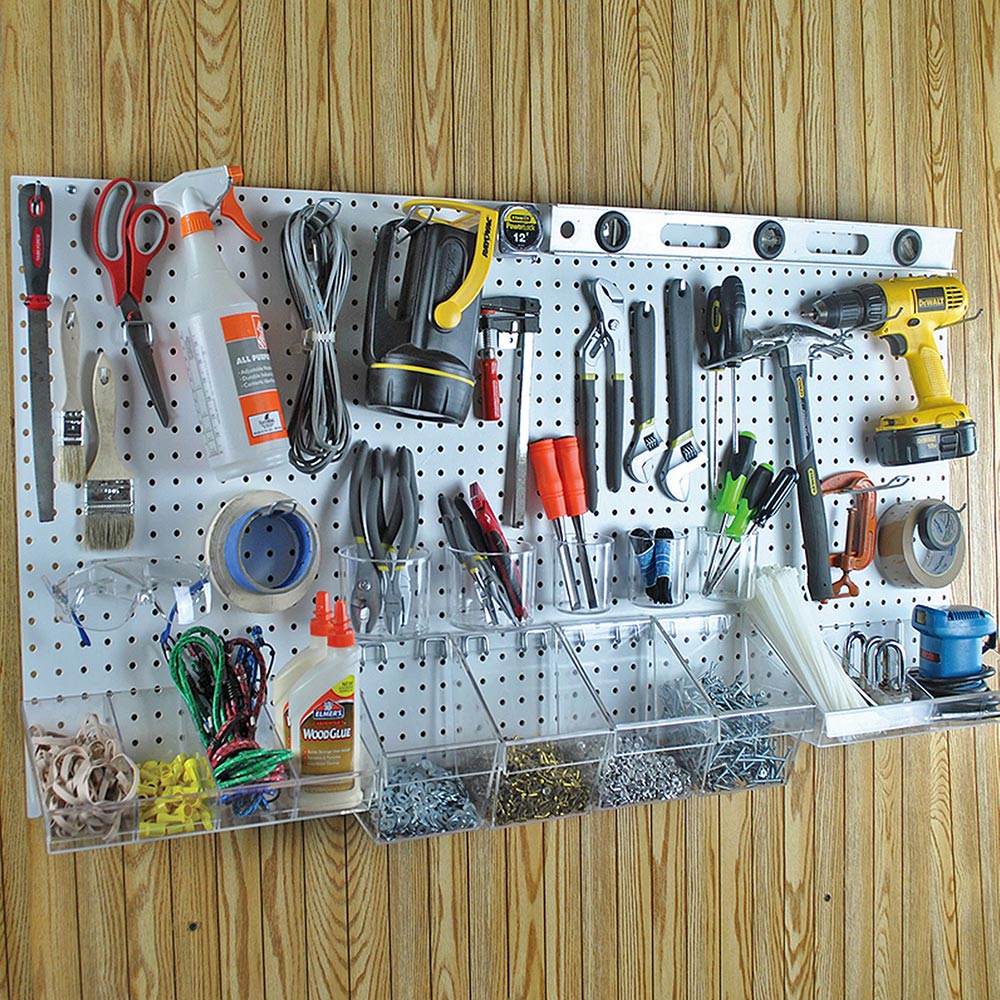
- Pegboard: quick access for hand tools. Use hooks and outline shapes to return tools to place.
- Tool chest: good for small hand tools and sockets. Lockable and portable.
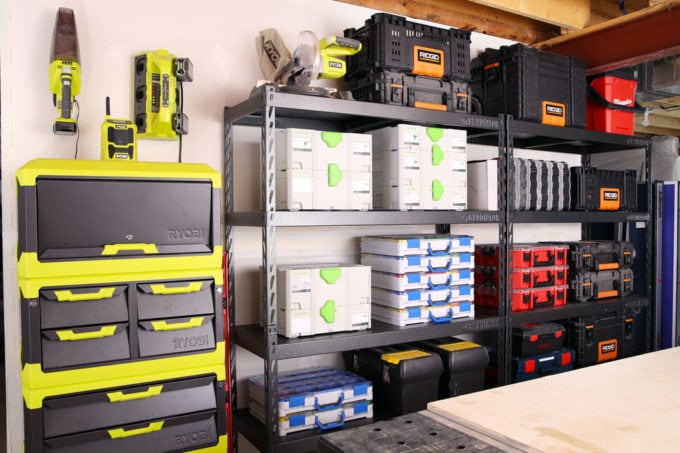
- Shelving: best for power tools, cases, and bins. Adjustable shelves adapt to changes.
- Wall-mounted racks: ideal for long items like rakes and levels.
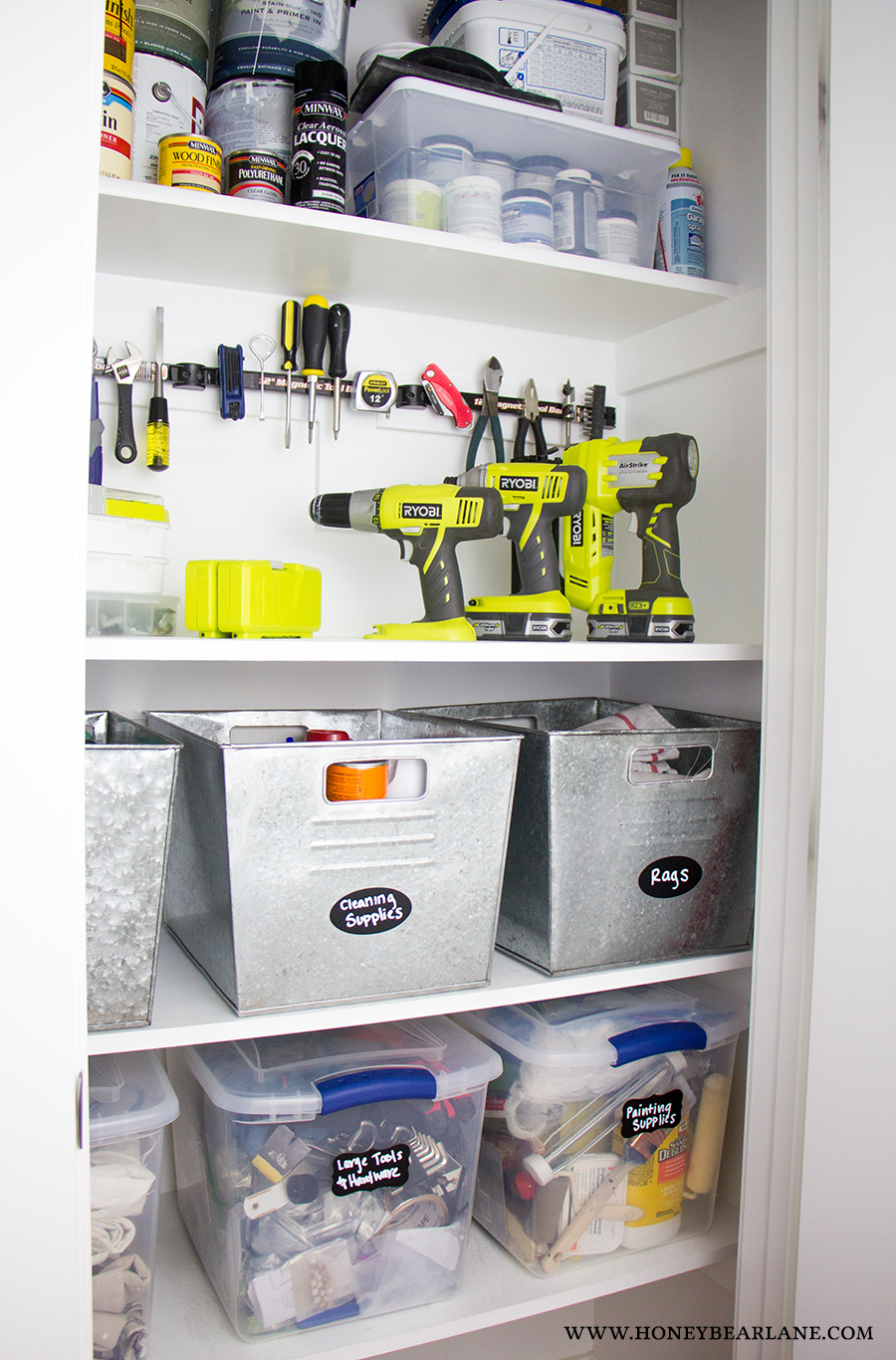
- Clear bins: store fasteners and small parts. Transparent bins help you see contents.
- Shadow boards: outline each tool for fast visual checks. Great for shared workshops.
- Magnetic strips: hold metal hand tools and keep counters clear.
I used a pegboard above my bench and clear bins on shelves. It cut search time in half and kept my bench tidy.
:max_bytes(150000):strip_icc()/organizing-tools-5-40cdd5056207487d877e50c13c995368.jpg)
Tool-specific organization tips
Different tools need different care and layouts. Follow these quick rules.
- Hand tools: hang on pegboard or store in shallow drawers for visibility.
- Power tools: keep in original cases or dedicated shelves to protect cords and motors.
- Fasteners and small parts: use small clear jars or labeled bins sorted by size and type.
- Garden tools: hang long-handled tools on wall racks and store small garden tools in a bin.
- Blades and bits: use labeled cases or magnetic holders to avoid loss and damage.
Tip from experience: store drill bits by size in foam or labeled strips. It prevents rust and saves time.
Labeling, inventory systems, and tracking
Labels and a simple tracking system keep the system working over time.
- Use printable labels or a label maker for bins, drawers, and shelves.
- Numbered bins with a small inventory sheet work well for many small parts.
- Consider a simple spreadsheet or app to track rare or expensive tools.
- Update the inventory after major projects or purchases.
Labels reduce guesswork. In my shop, labeled bins stopped the constant hunt for nails and screws.
Safety, maintenance, and protection
Good organization includes care for tools and safety for people.
- Keep tools clean and dry. Wipe down after use to remove grime or moisture.
- Oil moving parts and sharpen blades as needed to prolong life.
- Store sharp or heavy tools out of children’s reach in locked cabinets.
- Use silica gel packets or dehumidifiers in damp spaces to prevent rust.
- Secure power tool cords and store batteries in a cool, dry spot.
A small maintenance habit saves replacement costs. I set a monthly 10-minute check and it keeps everything working.
:max_bytes(150000):strip_icc()/organizing-tools-6-c3735d9caaee41a089de79b86451e2ea.jpg)
Organizing tools in small spaces
Small spaces need smart, vertical thinking and multi-use solutions.
- Use vertical wall space with pegboards or slatwall.
- Install fold-down workbenches that hide tools when closed.
- Stack clear bins and label the short end for easy pull-out access.
- Use over-door racks and the back of cabinet doors for small tool storage.
I once organized tools in a tiny closet with wall hooks and a small rolling drawer. It felt like adding a mini shop.
Budget-friendly and DIY ideas
Good organization does not need to be expensive. Try these low-cost options.
- Repurpose mason jars for nails and screws. Attach the lids under a shelf for handy access.
- Use scrap plywood to make a custom pegboard or shadow board.
- Upcycle an old dresser as a tool chest for hand tools and supplies.
- Make drawer organizers from foam or cardboard to separate tools.
DIY saves money and can fit odd spaces. Start small and improve over time.

People also ask (PAA-style questions)
How often should I reorganize my tools at home?
Reorganize tools after major projects or every 6–12 months. Quick checks after big jobs keep order.
What is the best way to store power tools?
Store power tools on shelves or in cases with batteries removed and chargers in a designated spot. Keep cords tidy and away from moisture.
How do I prevent tools from rusting in a garage?
Keep tools dry, use silica gel or a dehumidifier, and oil metal surfaces periodically. Proper storage and ventilation help a lot.
Frequently Asked Questions of how to organize tools at home
What is the simplest system for tool organization at home?
Start with sorting, labeling, and a pegboard near your workspace. These basics give fast wins and clear visibility.
How do I store small parts like screws and nails?
Use clear jars or small plastic bins labeled by size and type. Group similar items together for fast retrieval.
Can I organize tools without a garage?
Yes. Use wall space, closets, or under-stair storage. Vertical storage and compact bins work well in small homes.
How do I keep kids safe around tools?
Store tools in locked cabinets or high shelves. Keep sharp and heavy items out of reach and teach basic safety rules.
How long does a good tool organization system last?
A well-designed system can last years if maintained. Simple checks and labeling updates keep it relevant.
Conclusion
Organizing tools at home saves time, money, and stress. Start with a clear plan, sort by use, and choose storage that fits your space. Small habits like labeling and monthly checks keep systems working. Take one corner or one drawer today and build on that win. Try one method, adapt it, and share your results or questions below — I’d love to hear what worked for you.