Use a multimeter or non-contact tester to check voltage safely and accurately.
I’ve tested hundreds of circuits and trained technicians on how to test voltage with a tester. This guide breaks down tools, safety, step-by-step methods, and real-life tips so you can test household and automotive circuits with confidence. Read on to gain clear, practical skills and avoid common mistakes when measuring voltage with a tester.
:strip_icc()/measuring-voltage-outlet-77726753-ac9266c6cc0c4b56bf0b663bedd85883.jpg)
How voltage testers work
Voltage testers detect the electrical potential difference between two points. A non-contact voltage tester senses electric fields and lights or beeps when voltage is present. A digital multimeter measures exact voltage in volts using two probes and an internal meter.
Knowing how to test voltage with a tester starts with knowing how the tester senses electricity. Non-contact tools give quick go/no-go results. Multimeters give precise AC or DC values. Use the right tester for the job to get the right answer.
Types of voltage testers and when to use them
- Non-contact voltage tester
- Senses live wires without touching metal. Best for quick safety checks on outlets, switches, and wires.
- Two-probe voltage tester
- Simple probe tools for basic checks. They often light a neon or LED when voltage exists.
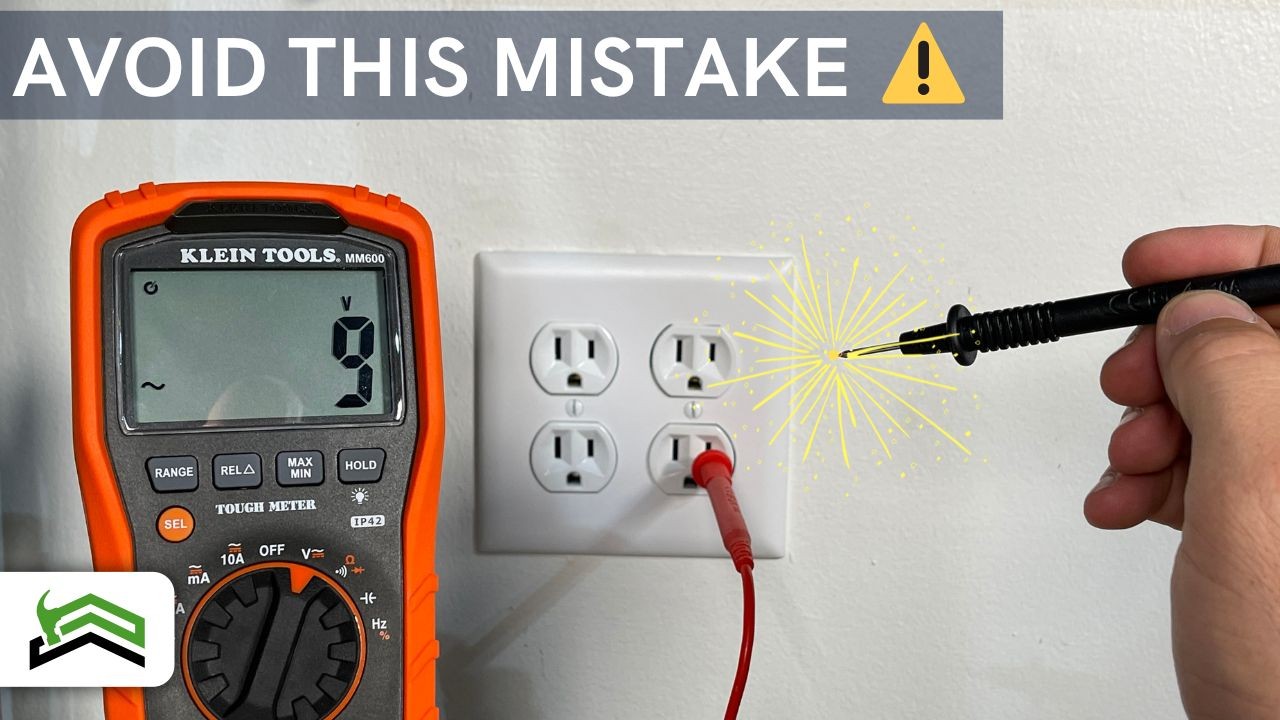
- Digital multimeter (DMM)
- Measures AC/DC voltage, resistance, and continuity. Use for precise readings and troubleshooting.
- Test light (automotive)
- Simple bulb-based tester for car 12V systems. Useful for quick checks but not precise.
- Clamp meter (with voltage mode)
- Primarily for current, but some clamp meters also measure voltage without breaking the circuit.
Choosing the right tool is the first step in learning how to test voltage with a tester. For safety and accuracy, I recommend carrying both a non-contact tester and a DMM.

Safety and preparation before testing
- Turn off power when possible
- Whenever you can, shut off the circuit breaker before working. Test to confirm power is off.
- Wear safety gear
- Use eye protection and insulated gloves when working with live circuits.
- Inspect the tester
- Check probes, insulation, and batteries. Faulty gear gives wrong readings.
- Know the difference between AC and DC
- Household mains is AC. Batteries and many electronics are DC. Set your tester accordingly.
- Work in a dry area
- Water greatly increases shock risk. Stand on dry ground and avoid wet conditions.
I once trusted a cheap tester with worn probe insulation. It failed. Ever since, I inspect tools before each job. If you’re learning how to test voltage with a tester, start slow and respect electricity.
Step-by-step: how to test voltage with a tester (DC and AC)
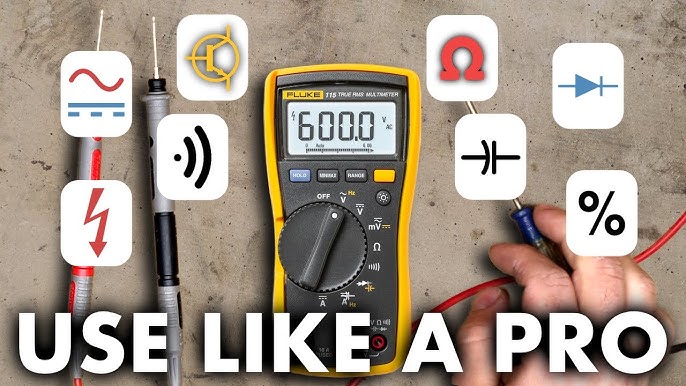
- Prepare your tools
- Select a multimeter or non-contact tester. Replace weak batteries and set the meter to the right mode (AC or DC).
- Test the tester
- Verify a known live source or battery to confirm the tester works before probing unknown circuits.
- For non-contact testers
- Hold the tester near the wire or outlet slot. Watch for lights or listen for beeps. Move slowly along the area to find live conductors.
- For a digital multimeter (basic AC outlet)
- Set the DMM to AC volts (V~). Insert the black probe to the neutral or ground slot, and the red probe to the hot slot. Read the display (usually around 120 V in the U.S.).
- For DC circuits (battery or electronics)
- Set the DMM to DC volts (V⎓). Place black probe on negative terminal and red probe on positive. Read the voltage and watch polarity signs.
- For wires or switch boxes
- If testing a wire, touch probes to conductor ends or contacts. Keep fingers behind probe guards and hold probes steady.
- After testing
- Remove probes, turn off the meter, and store tools safely. If you turned off power, restore it only after safe completion.
Follow these steps to practice how to test voltage with a tester reliably. Use small tasks first, like checking a battery, then move to household wiring as you grow comfortable.

Quick questions (PAA-style)
Can a non-contact tester tell exact voltage?
No. Non-contact testers only detect presence of voltage. They do not give numeric voltage values.
Is it safe to use a probe on a live mains wire?
Yes if you use a rated multimeter and proper safety gear. But it is safer to de-energize circuits before touching conductors.
How often should I calibrate or test my meter?
Check functionality before each use and consider professional calibration every 1–2 years for frequent use.

Interpreting readings and troubleshooting
- Normal home outlet
- Expect about 120 V AC in the U.S. Small variance (±5 V) is common.
- No reading on a live circuit
- Check meter range, fuse, probe contact, and battery. Confirm the circuit is actually energized.
- Unexpected DC in AC circuits
- Could indicate a wiring fault or an appliance feeding back. Turn off power and investigate.
- Fluctuating readings
- Loose connections, high impedance, or weak batteries in the tester can cause unstable numbers.
When you learn how to test voltage with a tester, you must trust your results. I once misread a loose probe as a bad GFCI. After rechecking and fixing the probe tip, the problem vanished. Always double-check odd results.

Tips, common mistakes, and best practices
- Tips
- Use the correct range or auto-range for best accuracy.
- Keep fingers behind probe guards.
- Replace probe tips and batteries regularly.
- Common mistakes
- Using a DC setting on AC measurement or vice versa.
- Relying only on non-contact tests for precise decisions.
- Testing with damaged insulation or broken probes.
- Best practices
- Label circuits after testing. Keep a notebook or phone photo log.
- Use a GFCI-protected outlet for tool tests in damp areas.
- Train with small, low-voltage projects before moving to mains.
These habits will help you master how to test voltage with a tester. Safety and method matter more than speed.

Frequently Asked Questions of how to test voltage with a tester
How do I test if an outlet is live?
Set a multimeter to AC volts and place the red probe in the hot slot and the black probe in the neutral or ground. A reading near 120 V indicates the outlet is live.
Can a non-contact tester detect all live wires?
Non-contact testers detect many live wires but can miss shielded or low-voltage lines. Use a multimeter for a definitive check.
What should I do if my meter shows zero volts?
Confirm the meter is set correctly and functioning, then test a known live source. If the meter works, power to that circuit is likely off.
Is it OK to test voltage with one probe touching ground?
Yes, for typical AC outlet testing you can touch black probe to ground and red to hot. Ensure the ground is good and you use safe technique.
How do I test battery voltage with a multimeter?
Set the meter to DC volts, touch the black probe to the negative terminal and red to the positive terminal. Read the displayed voltage to determine battery health.
Conclusion
You now have a clear path for how to test voltage with a tester: pick the right tool, follow safety steps, test carefully, and interpret readings with context. Start with simple battery checks and non-contact scans, then use a multimeter for precise work. Practice and good habits keep you safe and accurate. Try a small, safe test today, share your results, or ask a question below to keep learning.