A nut driver fits nuts and bolts; a screwdriver turns screws with shaped slots.
I’ve worked with both tools for years in workshops and on jobs. I’ll explain nut driver vs screwdriver from first-hand use and tech facts. You’ll learn how they differ, when to pick each, and practical tips to avoid common mistakes. Read on to make the right choice for your next project.
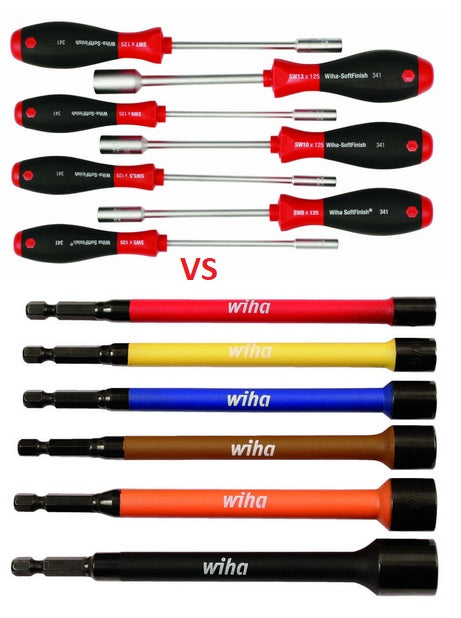
What is a nut driver vs screwdriver?
A nut driver is a hand tool made to tighten and loosen hex nuts and bolts. It looks like a short socket on a handle. It grips a nut around the sides. That gives even torque and reduces slip.
A screwdriver is made to turn screws. It has a shaped tip that fits a screw head cavity. Tips come in many types. Common tips are flat, Phillips, Torx, and square.
Key differences at a glance:
- Tool focus: nut driver vs screwdriver targets different fasteners.
- Grip style: nut driver grips hex sides; screwdriver fits inside the screw head.
- Torque: nut drivers often handle higher torque without cam-out.
- Tip types: screwdrivers have many interchangeable tips; nut drivers have socket sizes.
These core facts make the nut driver vs screwdriver choice clear. Use the right tool to protect fasteners and save time.

Design, parts, and common types
Nut driver parts:
- Handle: usually round or ergonomic for hand torque.
- Shaft: solid tube or hex bar for strength.
- Socket tip: fixed size or removable in sets.
- Variants: magnetic, insulated, long-shaft, ratcheting.
Screwdriver parts:
- Handle: shaped for grip and wrist comfort.
- Shaft: solid or replaceable bit holder.
- Tip: flat, Phillips, Torx, Pozidriv, square, and more.
- Variants: stubby, long, ratcheting, precision, impact-ready.
How design affects use:
- A nut driver vs screwdriver handles force differently. Nut drivers use the socket shape to avoid stripping. Screwdrivers rely on tip fit and can cam out if misused.

When to use a nut driver vs screwdriver
Practical scenarios:
- Use a nut driver when you work with nuts and hex-head bolts. Examples: appliance repair, HVAC panels, electrical connectors.
- Use a screwdriver for wood screws, machine screws with recessed heads, and electronics screws.
- Choose a nut driver for higher torque, quick hex fastening, and repeat work.
- Choose a screwdriver for varied screw head types and when you need a precise tip fit.
Access and space:
- Use long nut drivers for recessed nuts.
- Use stubby screwdrivers for tight spots.
- For confined spaces, consider a nut driver with a thin socket or a right-angle screwdriver.

Advantages and limitations
Advantages of nut drivers:
- Secure grip on hex shapes reduces slippage.
- Faster for repetitive nut work.
- Simpler set selection by socket size.
Limitations of nut drivers:
- Limited to hex or square heads.
- Fewer tip options for varied screw heads.
- Bulkier for very small fasteners.
Advantages of screwdrivers:
- Wide range of tip types fits many screws.
- Precision options for small electronics.
- Interchangeable bit sets save space.
Limitations of screwdrivers:
- Increased risk of cam-out if tip doesn’t fit.
- Less efficient on hex nuts than nut drivers.
- Harder to apply high torque without slipping.
Understanding these pros and cons helps you pick between nut driver vs screwdriver for each task.

How to choose the right tool
Steps to decide:
- Identify the fastener type. Match hex to nut driver, recessed head to screwdriver.
- Check size and fit. A snug fit prevents damage.
- Consider torque needs. Use nut drivers or ratcheting drivers for higher torque.
- Evaluate workspace. Use long or stubby versions as needed.
- Think about speed. Sets with quick-change features speed up repeated work.
Buying tips:
- Buy a quality set that covers common sizes.
- Look for magnetic tips for ease.
- For electrical work, choose insulated handles rated for voltage.
- Consider a combined set of nut driver vs screwdriver bits and a ratchet driver for flexibility.

Personal experience and practical tips
I’ve used nut driver vs screwdriver on kitchen appliances, bikes, and HVAC units. I once stripped a tuning screw by using a slightly wrong screwdriver. Lesson learned: stop and match the tip. On another job, a nut driver cut my time in half when I swapped from a wrench.
Hands-on tips:
- Always match size and type. Small gaps cause damage.
- Use a light steady push. That keeps the tip seated.
- Keep tools clean and dry. Dirt shortens tool life.
- Replace worn tips. Worn tips slip and ruin fasteners.
- Invest in a small ratcheting nut driver or bit driver for speed.
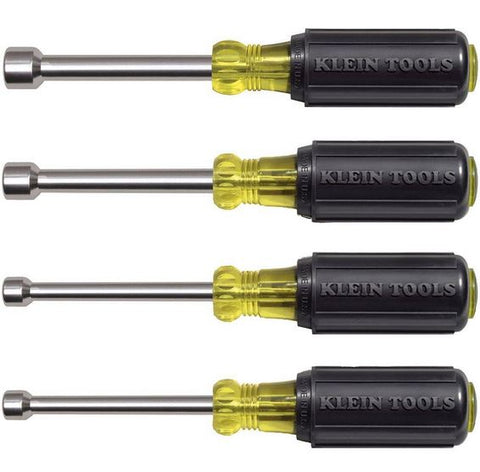
Frequently Asked Questions of nut driver vs screwdriver
What exactly is the main difference between a nut driver and a screwdriver?
A nut driver fits hex nuts and bolts with a socket-style tip. A screwdriver fits into screw head recesses like Phillips or flat slots.
Can a screwdriver be used on nuts in a pinch?
You can sometimes use a screwdriver on a nut with care, but it is not ideal. It risks slipping and damaging the nut or screw.
Are nut drivers better for torque than screwdrivers?
Yes. Nut drivers usually give better torque control on hex heads and reduce cam-out compared to screwdrivers. For very high torque, use a socket wrench or ratchet.
Should I buy a set that includes both nut drivers and screwdrivers?
Yes. A mixed set gives flexibility for many jobs and reduces tool swapping. It’s a smart choice for home and professional work.
What maintenance tips keep nut drivers and screwdrivers lasting longer?
Keep tips clean and dry and replace worn tips. Store them in a case and avoid using screwdrivers as pry bars or chisels.
Conclusion
Choosing between nut driver vs screwdriver is simple when you know the fastener. Use a nut driver for hex nuts and higher torque. Use a screwdriver for recessed screws and varied heads. Match size, keep tools in good repair, and buy a quality set that fits your work. Try this: next project, check the fastener first. Use the correct tool and you’ll save time and avoid damage. Share your tool wins or questions below, or subscribe for more hands-on guides.