MC cable is metal-clad and better for exposed or commercial runs; Romex is NM for dry, concealed residential use.
I have worked on many home and shop wiring jobs. I will walk you through mc cable vs romex cable with clear facts, code notes, and real trade tips. You will learn when to choose each type, how costs and installation differ, and common pitfalls to avoid so you can pick the right cable for your project.
What are MC cable and Romex cable?
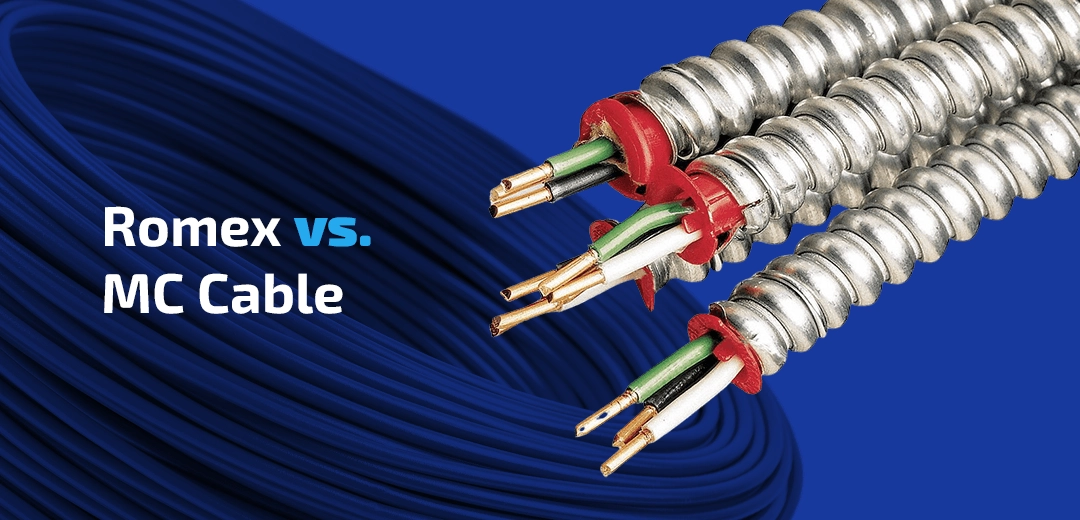
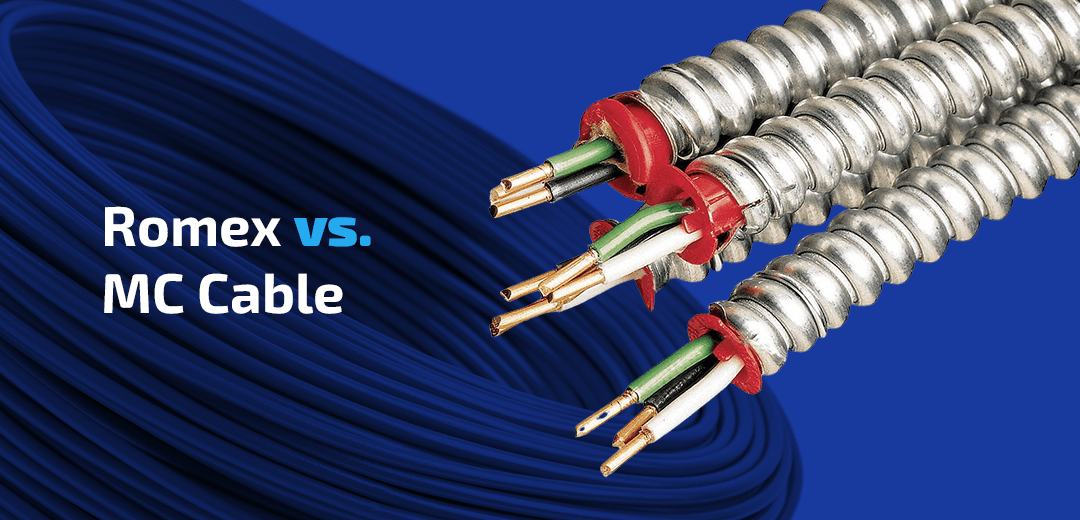
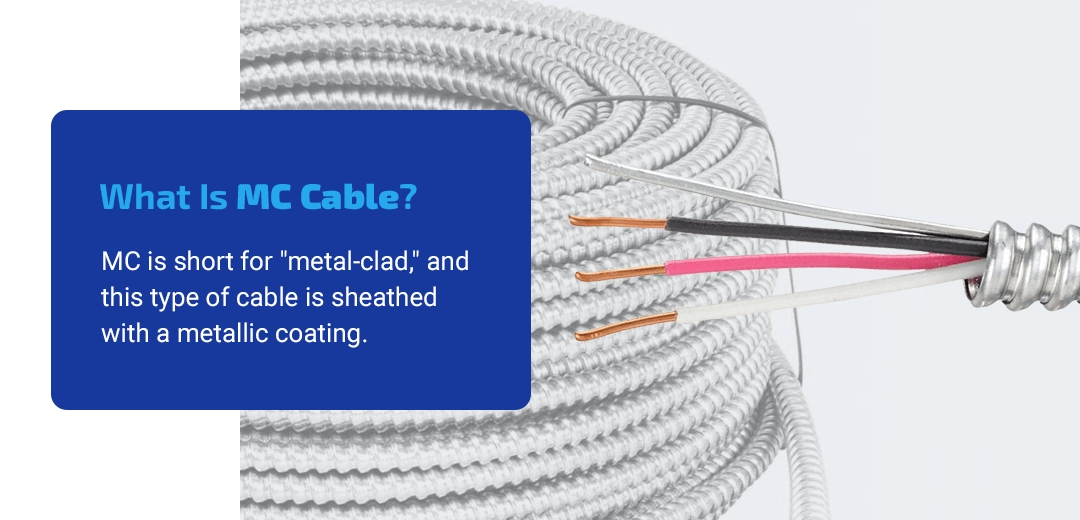
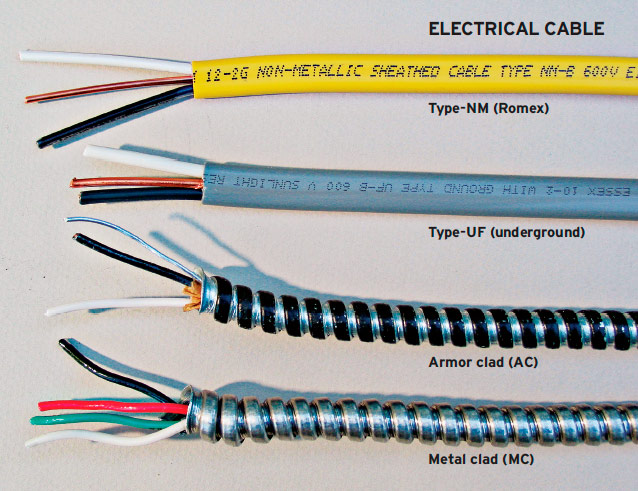
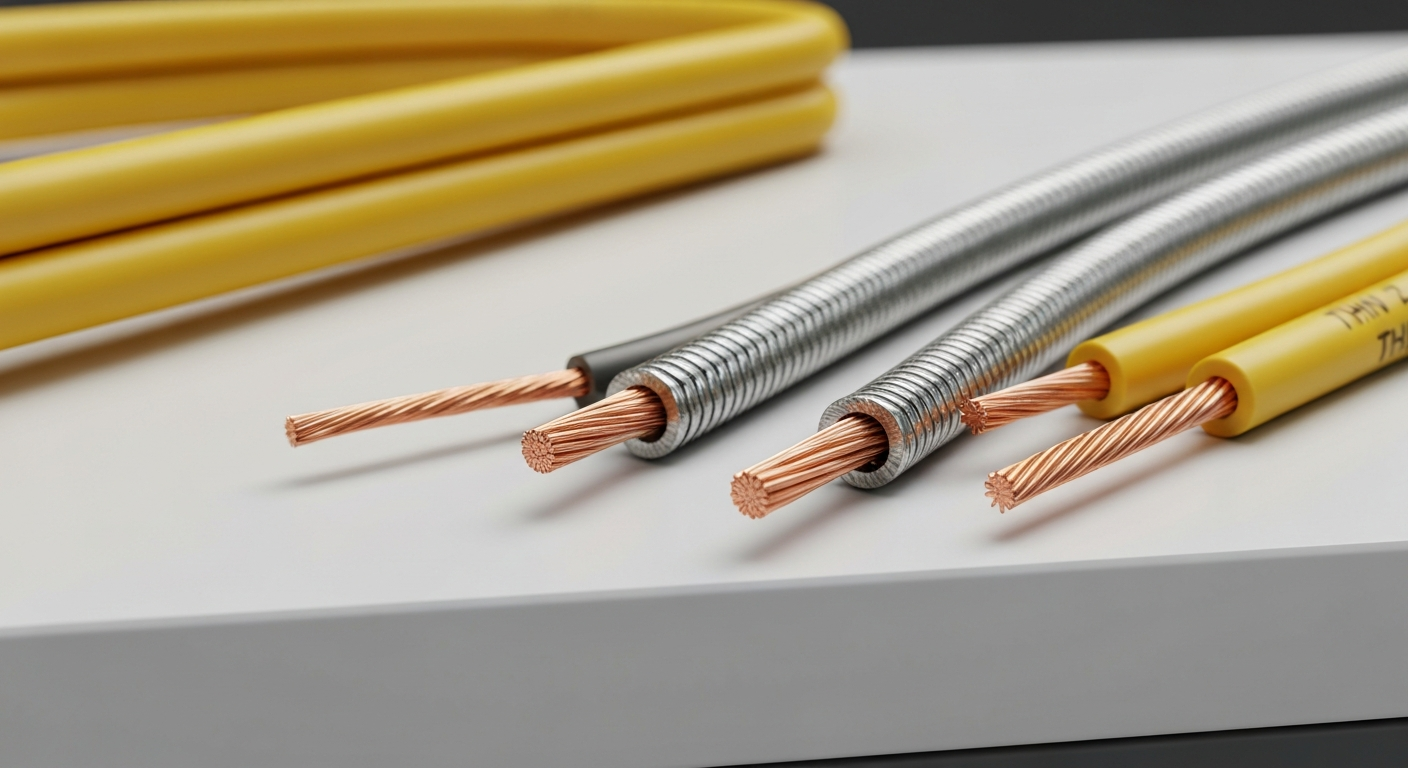
MC cable stands for metal-clad cable. It has insulated conductors inside a metal armor. The armor protects the wires and can act as a ground path in many cases.
Romex is a brand name often used for NM cable, or nonmetallic sheathed cable. NM has plastic outer sheathing. It is common in home wiring inside walls and ceilings.
MC cable vs romex cable matters when you think about protection, environment, and code rules. I have pulled both types through attics and ceilings. Each has clear uses.
Key differences: construction, protection, and grounding
Construction
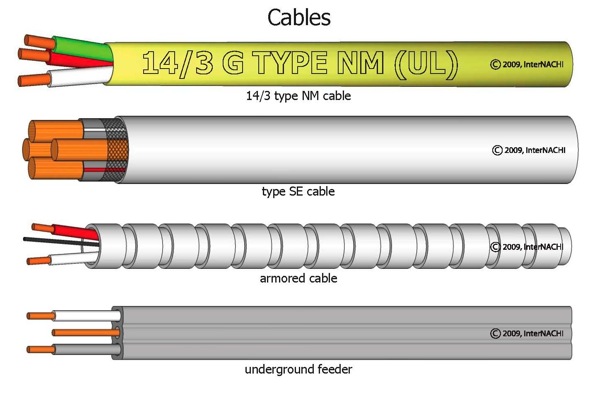
- MC cable has metal armor around insulated conductors. Armor may be steel or aluminum.
- Romex (NM) has a plastic jacket around insulated conductors and a separate bare ground wire.
Protection
- MC cable resists physical damage better because of metal armor.
- Romex needs to be inside walls or protected conduit to avoid damage.
Grounding
- MC cable often uses an equipment grounding conductor or relies on the armor when allowed by code.
- Romex uses a bare or insulated ground conductor inside the jacket.
MC cable vs romex cable decisions often come down to where the cable will run and how exposed it will be.
Where each cable is allowed and typical uses
MC cable common uses
- Commercial buildings and exposed runs in garages or basements.
- Where code or owner requests metal armor for fire or mechanical protection.
Romex cable common uses
- Most residential interior branch circuits in dry locations.
- Runs inside walls, floors, and ceilings where the cable is not exposed.
Code rules differ by local jurisdiction. Many electricians use MC cable for exposed areas that would otherwise need conduit. For inside walls, Romex is faster and cheaper to install. This practical split is why mc cable vs romex cable is a frequent choice on job sites.

Installation differences and labor
Routing and bending
- MC cable is stiffer because of metal armor. It needs larger bending radius and fittings.
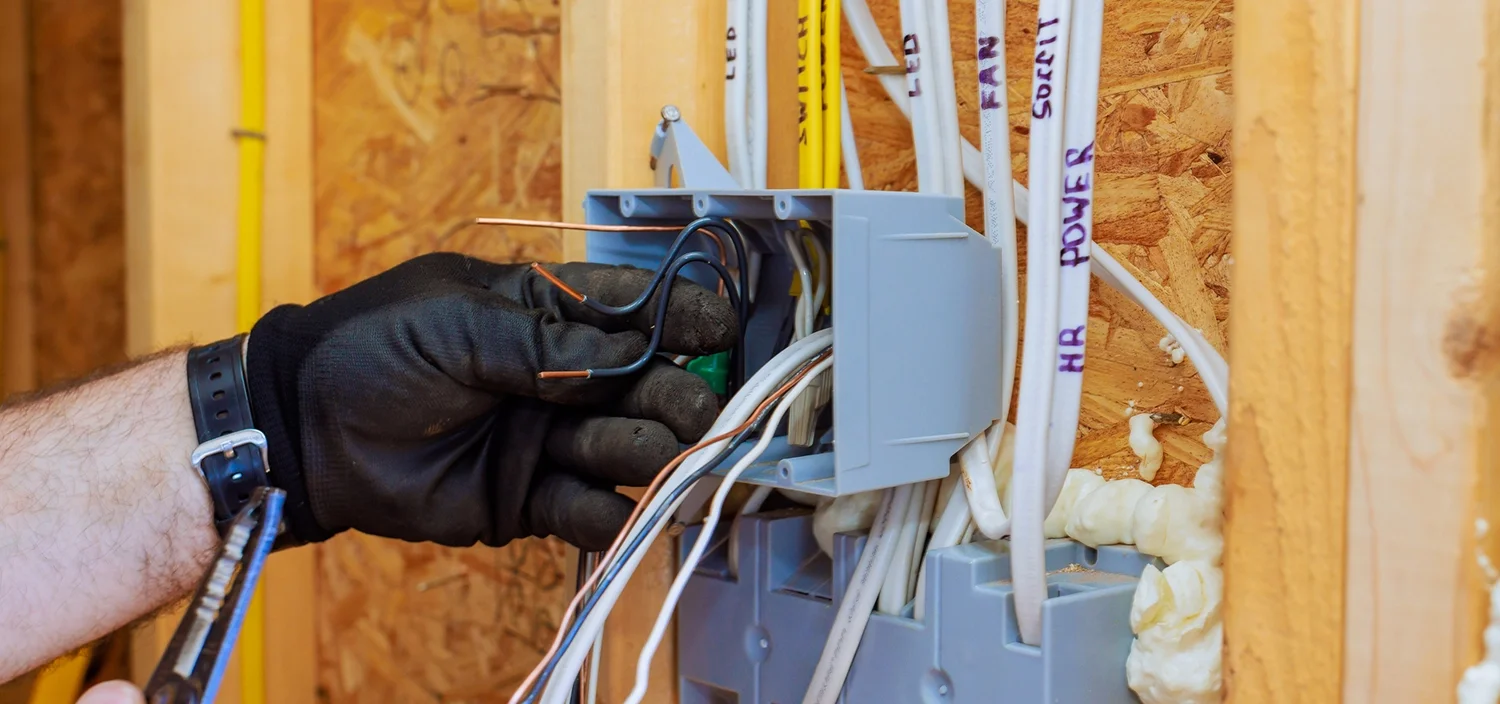
- Romex is flexible and easy to fish through studs and joists.
Terminations
- MC cable needs approved connectors and may require a bonding screw or clamp.
- Romex strips like traditional wire and connects in the same boxes with standard wire nuts.
Time and cost
- Romex is usually cheaper per foot and faster to install in residential spaces.
- MC cable costs more but can save time where conduit would otherwise be required.
When I wired a small clinic, using MC cable for exposed runs cut down on conduit work. That practical gain is part of the mc cable vs romex cable trade-off.
Safety, fire rating, and durability
Fire and heat
- Both types use insulated conductors rated for similar temperatures. Local code dictates allowed applications.
- MC armor can offer better mechanical fire-path protection in some assemblies.
Durability
- MC resists abrasion and crushing better than Romex.
- Romex is fine when it stays protected inside walls.
Failure modes
- Romex can be nicked by nails if not properly protected. That risk causes many installers to staple or shield it.
- MC can corrode in certain environments if not rated for moisture or harsh conditions.
Safety is the top concern. Choosing the wrong cable for a wet or exposed location can create hazards. That is a key reason to compare mc cable vs romex cable carefully.
Cost comparison and budgeting
Material cost
- Romex typically costs less per foot than MC cable.
- MC cable price can be 20–50% higher depending on conductor count and armor type.
Labor cost
- Romex installs faster in concealed residential work, lowering labor cost.
- MC may reduce labor when it replaces conduit runs in exposed areas.
Long-term value
- MC can last longer in exposed or rough settings, reducing repair costs.
- Romex gives low initial cost and quick install for standard homes.
I recommend getting quotes for both materials and installation time. For many projects the mc cable vs romex cable cost gap narrows when you factor labor and required conduit.

Code considerations and when inspectors prefer one over the other
National and local codes set rules for both cable types. Key points:
- NM (Romex) is typically limited to dry, interior locations and cannot be used in commercial or damp locations in many jurisdictions.
- MC is often permitted in commercial, unit equipment rooms, and in some wet or exposed areas when properly rated.
Always check local code and talk to your inspector before choosing. I once chased a permit delay because the plan called for Romex in an exposed ceiling area. Switching to MC solved the issue quickly. That experience shows how mc cable vs romex cable affects permits and inspections.
Advantages and limitations at a glance
Advantages of MC cable
- Strong armor and better physical protection
- Suitable for exposed runs and some commercial uses
- Can reduce need for conduit
Limitations of MC cable
- Higher cost
- Less flexible and harder to pull through small spaces
- Requires specific fittings and connectors
Advantages of Romex cable
- Low cost and easy to handle
- Great for standard residential interior wiring
- Quick to install and terminate
Limitations of Romex cable
- Not suitable for exposed or wet locations
- Needs protection from physical damage
- Not always allowed in certain commercial settings
This list helps when weighing mc cable vs romex cable for a specific job.
How to choose: practical checklist
Ask these questions
- Is the run exposed or inside walls?
- Will the cable be in a damp or wet area?
- Does local code or the inspector require metal armor?
- What is the budget for materials and labor?
- Do you need faster installation or long-term durability?
Make the choice
- Use Romex for dry, concealed residential circuits when allowed.
- Use MC where runs are exposed, commercial, or need extra protection.
- When in doubt, consult the local code or a licensed electrician.
From hands-on work, the checklist above saved time and inspections many times. It simplifies the mc cable vs romex cable decision.
Personal experience, tips, and common mistakes
What I learned on the job
- Always check the box fill. MC and Romex differ in conductor diameter and box space rules.
- Label runs at both ends. MC often has more conductor options, and labels help avoid mix-ups.
- Use the right connector. A wrong connector can lead to a failed inspection.
Common mistakes to avoid
- Running Romex in exposed ceiling spaces without protection.
- Forcing MC through tight studs without proper bending clearance.
- Not confirming grounding method for MC armor when required.
A simple tip: carry both types on the truck. I used that trick for years. It cuts delays and helps in the mc cable vs romex cable debate on site.
PAA-style questions (quick answers)
What is the main difference between MC cable and Romex?
MC cable has metal armor and better physical protection. Romex is nonmetallic sheathed and best for dry, concealed residential wiring.
Can MC cable be used instead of Romex in a house?
Yes, MC can be used if local code allows it and you use proper connectors. It may cost more but adds durability.
Are there places where Romex is forbidden?
Yes, Romex is often not allowed in damp, wet, or exposed commercial areas. Local codes set the limits.
Does MC cable need a separate ground wire?
Sometimes MC uses its armor as a ground, but many installations include a dedicated grounding conductor. Follow code and product instructions.
Frequently Asked Questions of mc cable vs romex cable
What environments are best for MC cable?
MC cable is best for exposed areas, commercial spaces, and places needing extra protection. It handles physical damage better than Romex.
Can Romex be used in basements and garages?
Romex can be used in dry, finished basements and garages if protected from damage. If the area is exposed or damp, MC or conduit is usually required.
Which cable is cheaper to buy and install?
Romex is cheaper per foot and installs faster in concealed residential work. MC costs more but can save labor when replacing conduit.
Do both cables meet the same ampacity rules?
Ampacity depends on conductor size, insulation rating, and installation conditions, not just cable type. Check the wire gauge and code tables for correct ampacity.
Is special training needed to install MC cable?
Installing MC safely requires knowledge of proper connectors, bonding, and bending limits. A licensed electrician or trained installer is recommended for MC runs.
Conclusion
Choosing between mc cable vs romex cable comes down to location, code, durability, and budget. Romex is ideal for dry, concealed residential wiring. MC is better for exposed, commercial, or rough environments. Use the checklist and tips here to pick the right cable for your job.
Take action: review your project site, check local rules, and decide which cable fits your needs. If you are unsure, contact a licensed electrician or get a permit inspection. Share your experience or ask a question in the comments below.