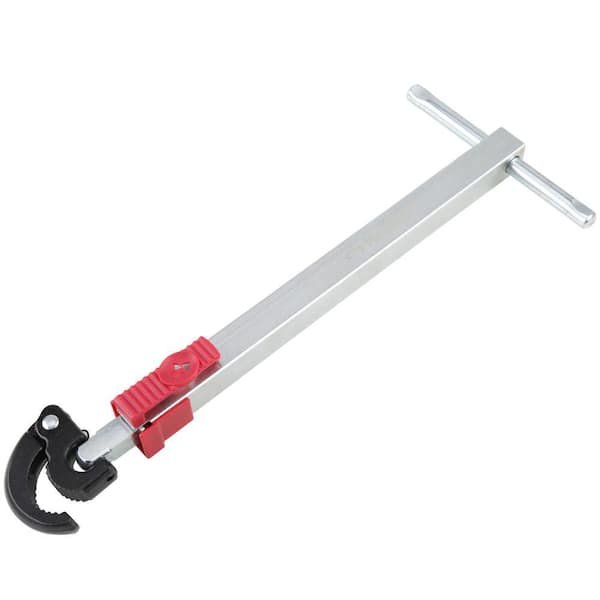
A basin wrench grips hard-to-reach faucet nuts; a sink wrench works best for shallow or exposed fasteners.
I’ve spent years under sinks and behind vanities, so I know the small differences that matter. This article compares basin wrench vs sink wrench with clear, practical advice. You will learn how each tool works, when to choose one over the other, and tips from hands-on experience. Read on to pick the right wrench for your next plumbing job.

How basin wrench vs sink wrench work
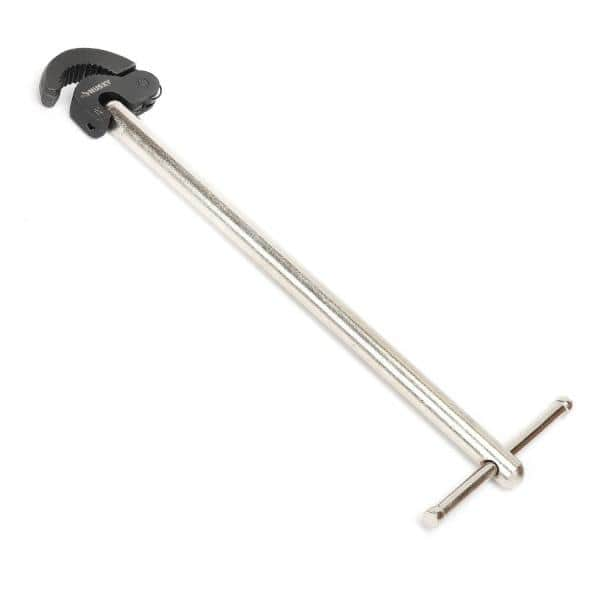
A basin wrench reaches nuts behind the faucet. It has a long shaft and a pivoting jaw. The jaw bites when you pull or push, so it tightens as you apply force.
A sink wrench is compact. It often has a T-handle or rotating head. It works on nuts you can see or reach from the top or side.
Both tools use leverage. The basin wrench trades maneuverability for reach. The sink wrench trades reach for speed and simplicity.

Key differences between basin wrench vs sink wrench
Tool design and access
- Basin wrench: long handle, pivoting jaw, ideal for deep or tight spaces.
- Sink wrench: short, often T-shaped, ideal for accessible nuts.
Grip and control
- Basin wrench: grips behind the faucet and resists slipping.
- Sink wrench: faster to use when space allows but can slip on rounded nuts.
Use cases
- Basin wrench: single-hole faucets, wall-mounted spouts, deep counters.
- Sink wrench: pop-up drains, supply line nuts, shallow mounting nuts.
Materials and durability
- Basin wrench: metal shaft with spring-loaded jaws; can bend if misused.
- Sink wrench: sturdy body, often thinner profile; easier on small nuts.
Price and availability
- Basin wrench: slightly pricier but a staple for faucet work.
- Sink wrench: affordable and often included in plumbing sets.

When to use a basin wrench vs sink wrench
Choose a basin wrench vs sink wrench based on access and nut location. Use a basin wrench when you cannot reach the nut from above. Use a sink wrench when you can see the nut and have room to turn.
Common scenarios
- If the nut sits behind the faucet tailpiece and your arm can’t reach, use a basin wrench vs sink wrench.
- If the nut is under a shallow sink or near the edge, the sink wrench saves time.
PAA-style question 1: When should I pick a basin wrench vs sink wrench?
- Use a basin wrench for deep, hidden nuts. Use a sink wrench for exposed or shallow nuts.
PAA-style question 2: Can I use a sink wrench in tight spaces instead of a basin wrench?
- Not usually. A sink wrench may be too short. The basin wrench gives reach and angle in tight spots.
Types, features, and pros/cons of basin wrench vs sink wrench
Basin wrench types
- Standard basin wrench: fixed length and pivoting jaw for most faucets.
- Telescoping basin wrench: adjustable length for different counters.
- Ratcheting basin wrench: allows one-way turning without repositioning.
Sink wrench types
- T-handle sink wrench: basic, simple torque control.
- Rotating head sink wrench: fits various nut shapes and angles.
- Multi-head sink wrench: includes adapters for different sizes.
Pros of a basin wrench vs sink wrench
- Reach: basin wrench reaches hard spots behind faucets.
- Angle: pivot jaw fits awkward angles.
- Versatility: fits a range of nut sizes.
Cons of a basin wrench vs sink wrench
- Bulk: basin wrenches can be long and unwieldy.
- Clearance: they may hit cabinet bottoms or pipes.
- Learning curve: requires practice to position the jaw.
Pros of a sink wrench
- Speed: quick to use on visible nuts.
- Compact: easier to store and handle.
- Precision: less chance of disturbing nearby fittings.
Cons of a sink wrench
- Limited reach: not for deep-set nuts.
- Space limits: needs clearance to turn.

How to use a basin wrench and a sink wrench: step-by-step
Using a basin wrench
- Inspect the area and clear loose items.
- Fit the jaw around the nut behind the faucet.
- Adjust the shaft angle so the jaw bites when you pull.
- Turn slowly, applying steady force. Re-seat the jaw if it slips.
- Remove the nut and finish with a wrench if needed.
Using a sink wrench
- Confirm you have direct access to the nut.
- Choose the correct head or adapter.
- Place the wrench on the nut and hold the handle steady.
- Turn with steady pressure. Reverse the wrench to loosen or tighten.
- Finish hand-tightening where appropriate.
Safety tips
- Use gloves and eye protection.
- Support the faucet when loosening mounting nuts.
- Work slowly to avoid stripping nuts or damaging finish.

Buying guide and maintenance for basin wrench vs sink wrench
What to look for when buying
- Build quality: solid metal shaft and strong jaws.
- Size options: telescoping or multiple lengths.
- Grip comfort: non-slip handles for control.
- Ratcheting action: useful for confined areas.
- Warranty: a sign of lasting quality.
Maintenance tips
- Wipe tools after use to remove water and grime.
- Lubricate moving parts lightly to prevent rust.
- Store in a dry toolbox or hang on a pegboard.
- Replace worn jaws or adapters to keep good grip.
Personal experience and practical tips
- I once battled a faucet with frozen nuts. The basin wrench saved the job. I learned to use slow turns and re-seat the jaw often. For kitchen sinks with some clearance, I reach for the sink wrench. It saves me time and prevents over-tightening. One mistake I made early on was forcing a basin wrench into a place with poor angle; the shaft bent slightly. I now check angles first and use a telescoping model when needed.
:max_bytes(150000):strip_icc()/SPR-how-to-use-a-basin-wrench-2718720-hero-A-6ba9e7b86b5c4c978b68a58c483237a9.jpg)
Frequently Asked Questions of basin wrench vs sink wrench
What is a basin wrench best used for?
A basin wrench is best for reaching and turning nuts behind faucets where access is limited. Its long shaft and pivoting jaw allow work in deep or cramped spaces.
Can I replace a basin wrench with a sink wrench?
You can sometimes, but not when the nut is hidden or hard to reach. A sink wrench lacks the reach and angle of a basin wrench in many faucet installs.
How do I prevent a basin wrench from slipping?
Seat the jaw fully on the nut, pull to engage the bite, and turn slowly. Clean or replace worn jaws to improve grip and avoid slipping.
Are telescoping basin wrenches worth it?
Yes for varied jobs. Telescoping basin wrenches let you adjust length to match sink depth and cabinet space. They add flexibility for pros and DIYers.
Which wrench is better for removing faucet mounting nuts?
Use a basin wrench for mounting nuts behind the faucet that are hard to access. Use a sink wrench if the mounting nuts are visible and reachable from above.
Conclusion
You now know the main points of basin wrench vs sink wrench. Use a basin wrench for deep, hidden nuts and a sink wrench for quick, visible jobs. Choose tools with quality, practice the jaw seating, and keep tools maintained.
Take action: check your toolbox, pick the right wrench for your next faucet task, and share your experience in the comments.