Electrical tape is best for quick, flexible fixes; heat shrink tubing gives a stronger, sealed, long-term result.
I have spent years fixing wiring in homes, cars, and small electronics. I know when a quick wrap will do and when a permanent seal is needed. This guide on electrical tape vs heat shrink tubing explains how each works, their strengths and limits, and clear rules to pick the right option for any job. Read on for hands-on tips, test-backed facts, and time-saving examples you can use today.

What are electrical tape and heat shrink tubing?
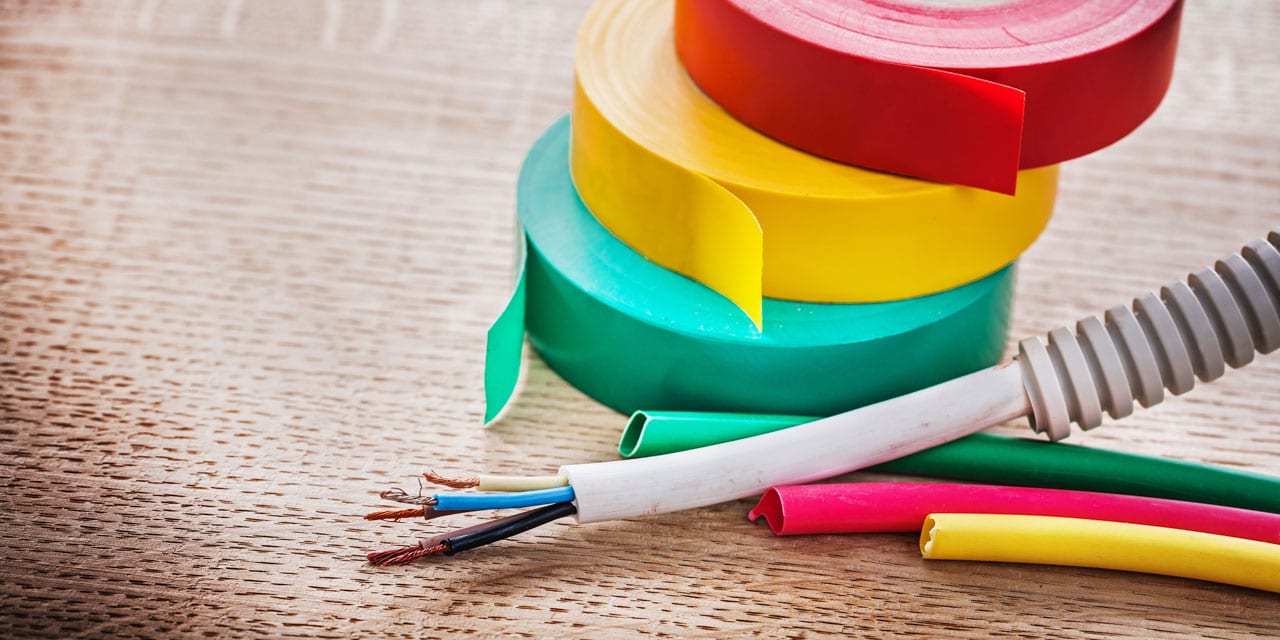
Electrical tape is a flexible, adhesive-backed vinyl or rubber tape. It wraps around wires to insulate and protect. It is easy to use by hand and good for quick fixes.
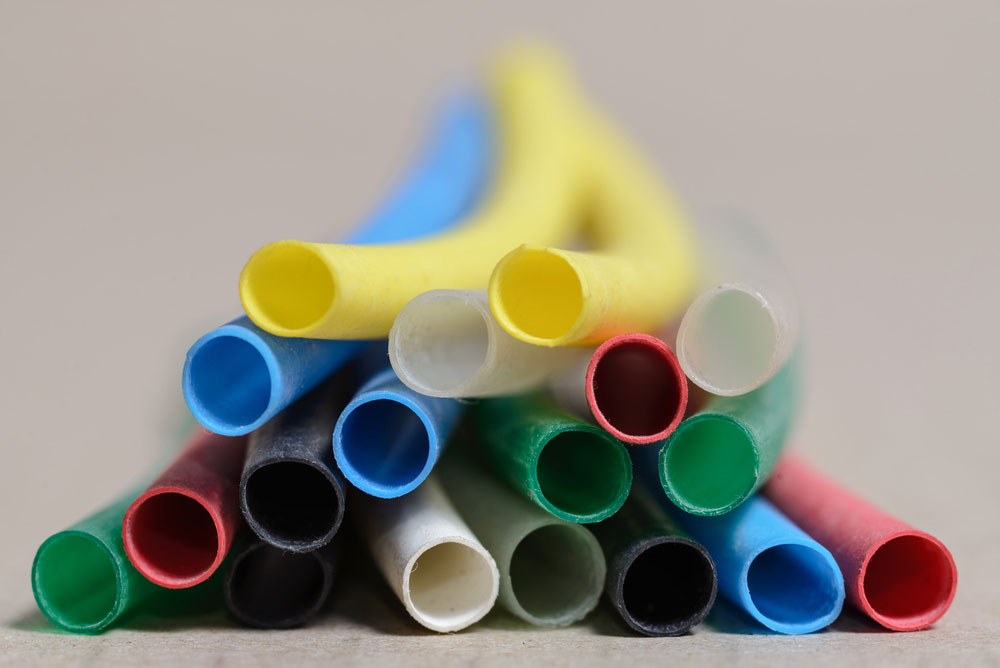
Heat shrink tubing is a hollow tube made of plastic that shrinks when heated. You slide it over a wire joint, apply heat, and it tightens to form a tight seal. It gives mechanical support and long-term protection.
Both protect wires, but they do so in different ways. Knowing how each works helps you choose the right fix for a job.
Key differences: performance, durability, and use
Here are the main ways electrical tape vs heat shrink tubing differ.
-
Insulation and seal
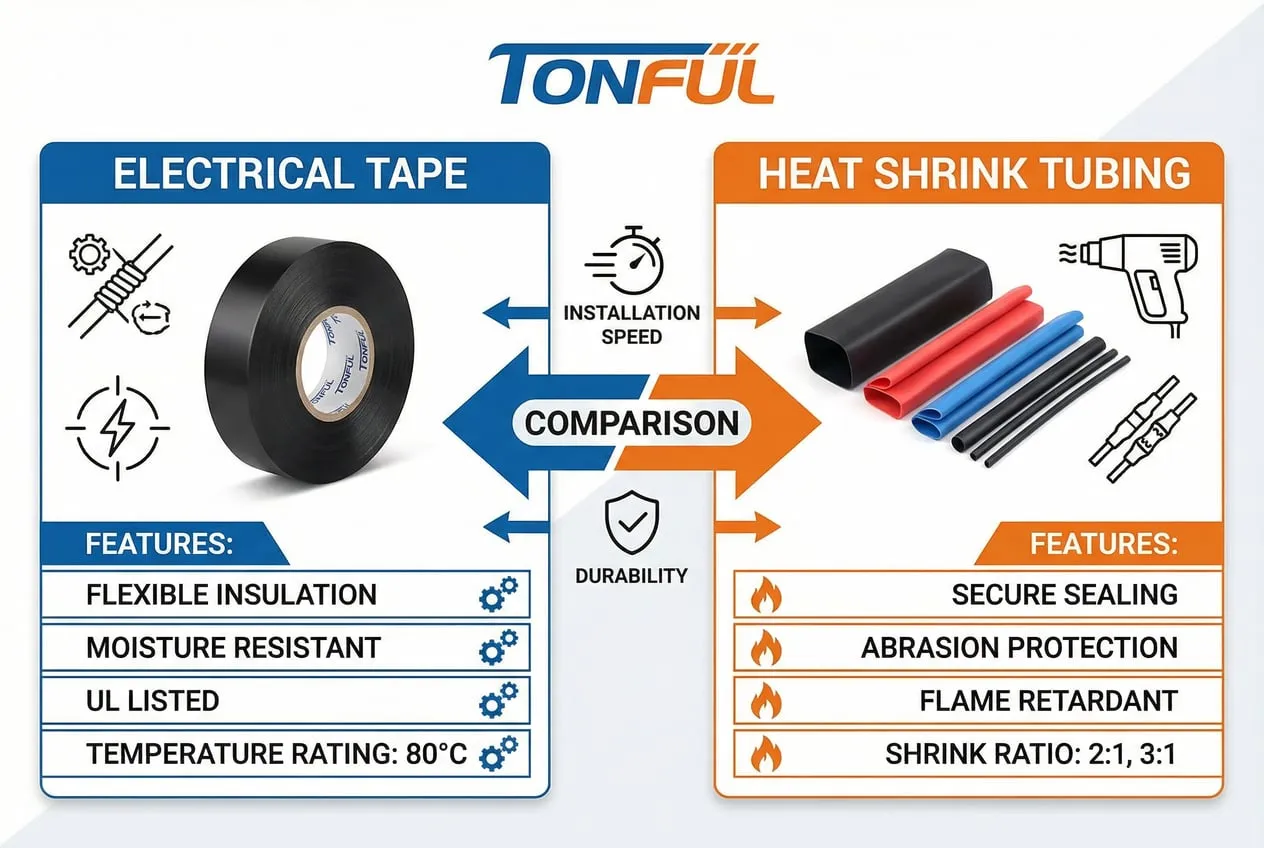
- Electrical tape protects by layering. It leaves gaps if not wrapped well.
- Heat shrink tubing forms a continuous sleeve. It seals better against moisture.
-
Mechanical strength
- Tape adds minimal strength. It can loosen over time.
- Heat shrink adds a firm jacket. It helps strain relief and holds connectors.
-
Longevity
- Tape can dry, crack, or peel in harsh conditions.
- Heat shrink stays stable longer if the correct type is used.
-
Temperature and chemical resistance
- Standard vinyl tape works up to moderate temps. Special tapes exist for higher temps.
- Polyolefin heat shrink resists higher heat and many chemicals.
-
Appearance and neatness
- Tape can look uneven if wrapped by hand.
- Heat shrink gives a clean, professional finish.
These differences make the choice obvious in many cases. For short-term repair use tape. For sealed, long-term jobs choose heat shrink.
Materials, ratings, and standards
Understanding materials and ratings helps avoid mistakes when choosing between electrical tape vs heat shrink tubing.
-
Electrical tape materials
- Vinyl is common. It is stretchy and cheap.
- Rubber and silicone tapes handle heat better.
-
Heat shrink materials
- Polyolefin is most common. It shrinks evenly and resists UV.
- PTFE and fluoropolymer types handle extreme heat and chemicals.
-
Ratings to check
- Voltage rating for insulation safety.
- Temperature rating for operating or soldering heat.
- Flame retardancy for automotive or building use.
- Shrink ratio (2:1, 3:1) tells how much it reduces in diameter.
-
Standards and testing
- Look for accepted safety marks and manufacturer specs. These show tested performance.
Match the material and rating to your use. That keeps repairs safe and long lasting.
When to use electrical tape vs heat shrink tubing
Here are clear scenarios to help you choose.
-
Use electrical tape when:
- You need a fast, low-cost fix.
- You are bundling wires or labeling.
- The environment is not extreme and the repair is temporary.
-
Use heat shrink tubing when:
- You need water resistance or a sealed connection.
- You want mechanical support and a tidy finish.
- The job is long-term or in harsh conditions like automotive or marine.
Practical examples:
- A quick cover for a frayed lamp cord at home — use tape.
- Sealing solder joints in an outdoor LED strip — use heat shrink.
PAA-style questions
- Will heat shrink replace electrical tape?
- Heat shrink is better for permanent seals. Tape still works for quick or flexible needs.
- Can I use heat shrink without a heat gun?
- You can use a hair dryer for small tubes. A heat gun gives even shrink and is faster.
- Is electrical tape waterproof?
- Standard tape is not fully waterproof. It resists moisture some, but won’t seal like heat shrink.
How to apply both correctly
Proper application matters more than the material.
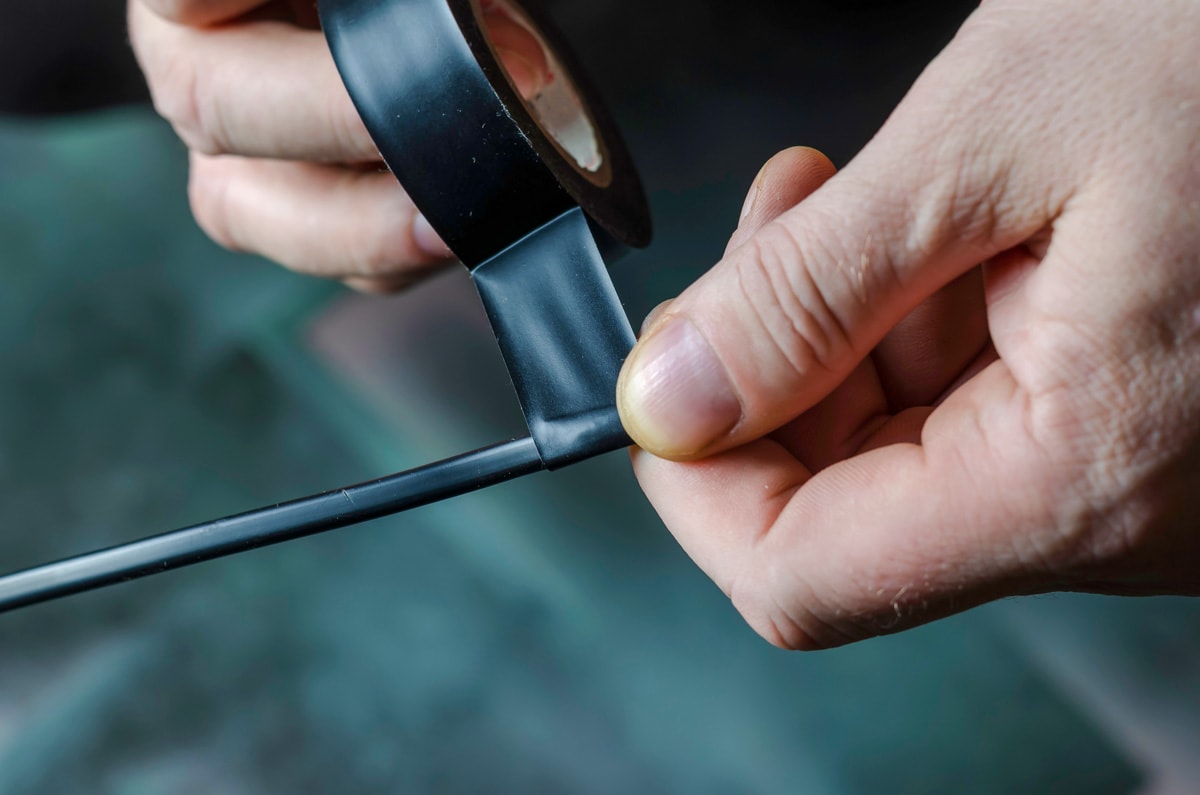
Electrical tape steps:
- Clean the wire. Remove dirt and oil.
- Start slightly before the damaged area.
- Stretch the tape lightly as you wrap.
- Overlap each pass by half the tape width.
- Finish with a few extra wraps and smooth the edge.
Heat shrink tubing steps:
- Choose the right diameter and shrink ratio.
- Slide the tubing over the joint before soldering or connecting.
- Apply heat evenly from the center outward.
- Use a heat gun or regulated tool to avoid scorching.
- For wet environments, use adhesive-lined (dual-wall) heat shrink.
Safety tips:
- Always disconnect power before working.
- Avoid open flames near insulation.
- Wear eye protection and gloves when using heat tools.
Do this and the repair will last.
Common mistakes, tips, and personal experience
I once fixed a motorcycle wiring harness with only tape. The repair held for weeks but failed in the rain. That taught me to use heat shrink for outdoor and vibration-prone jobs.
Common mistakes to avoid:
- Wrapping tape over dirty or oily surfaces.
- Using too small a heat shrink tube and forcing it.
- Applying heat unevenly and leaving bubbles under tubing.
- Assuming all tape is the same; cheap tape degrades fast.
Tips from the field:
- Keep a kit with 2:1 and 3:1 heat shrink sizes.
- Use flame-retardant tape for engine compartments.
- For quick jobs, wrap tape first, then use heat shrink over it for extra protection.
These habits save time and prevent rework.
Cost, availability, and environmental impact
Cost and access shape what you use.
-
Cost and availability
- Electrical tape is cheap and sold everywhere.
- Heat shrink costs more but is still affordable. Kits exist for DIYers.
- Heat guns add one-time cost but last a long time.
-
Waste and environment
- Both are plastic-based and not easy to recycle.
- Heat shrink provides longer life, which can reduce waste over time.
- Choose higher-quality materials to lower repeat repairs and waste.
Weigh cost against longevity. Often paying a bit more upfront saves time and money later.
Frequently Asked Questions of electrical tape vs heat shrink tubing
What is better for outdoor electrical repairs?
Heat shrink tubing is generally better outdoors because it seals out moisture and resists UV longer than most electrical tape.
Can heat shrink tubing handle high-current wires?
Heat shrink insulates but does not increase current capacity. Use the correct gauge and ensure proper connector sizing for high-current wires.
Is electrical tape safe for automotive use?
Certain electrical tapes are safe for automotive use if they are rated for heat, oil, and vibration; choose automotive-grade tape for engine bays.
How do I choose the right shrink ratio?
Match the tubing diameter to the part before shrink. A 2:1 shrink ratio is common and fits many repairs; 3:1 is for larger-to-smaller transitions.
Can I reuse heat shrink tubing?
No. Heat shrink tubing is a one-time, permanent solution. It cannot return to its original size after shrinking.
Does electrical tape degrade over time?
Yes. Cheap vinyl tape can dry and crack after months or years, especially in heat and sun, which reduces protection.
Should I solder before using heat shrink?
Yes. For best electrical and mechanical performance, solder the connection, then slide heat shrink over the joint and apply heat.
Conclusion
Choosing between electrical tape vs heat shrink tubing comes down to need. Use electrical tape for quick, flexible, low-cost fixes. Use heat shrink tubing for sealed, durable, and neat repairs. I recommend keeping both on hand and matching the material to the job. Start small: test a heat shrink kit on a simple joint today and see the difference. If this guide helped, try a repair and share your results, or subscribe for more practical wiring tips.